





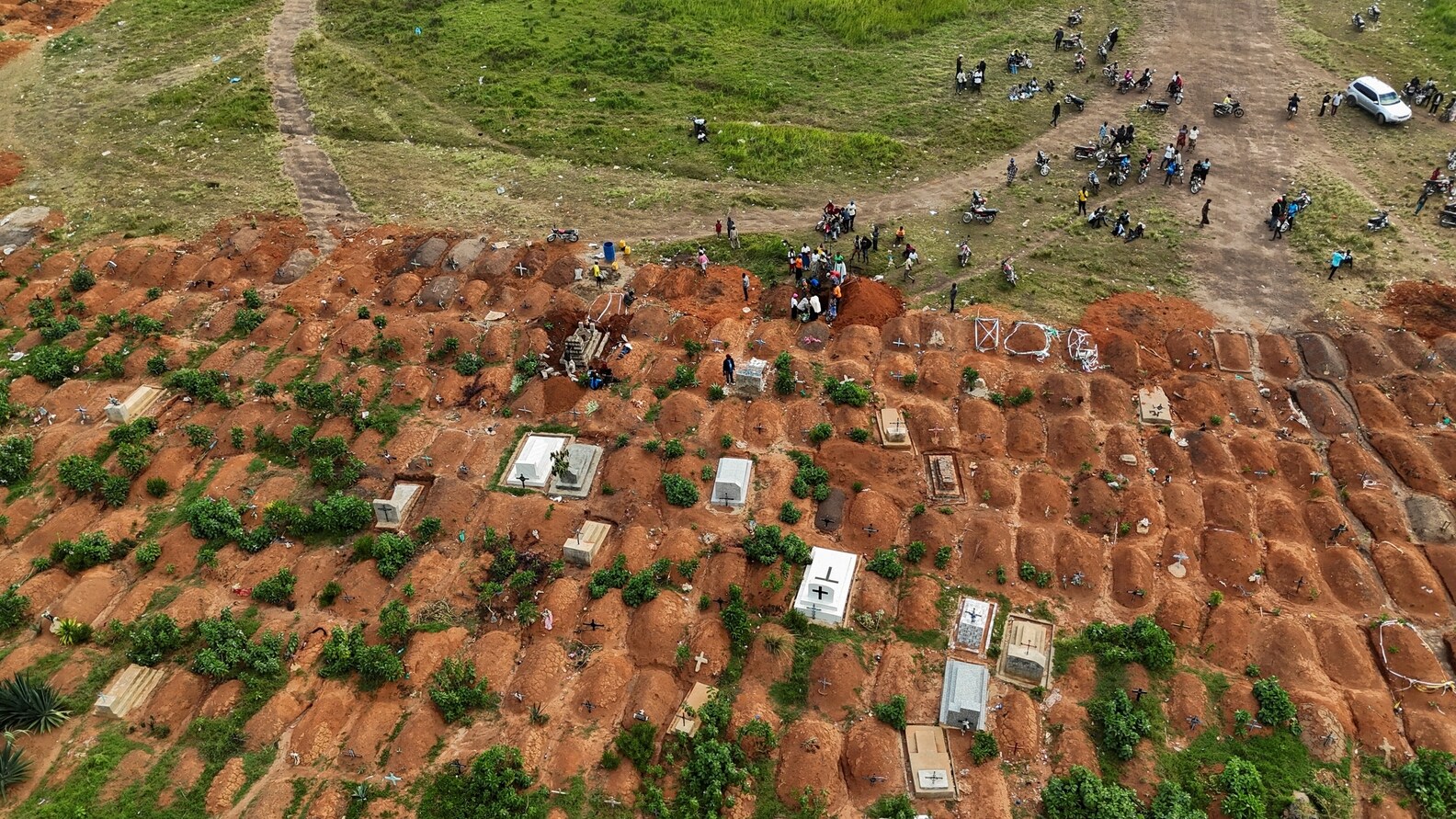

The country’s National Institute of Public Health (INSP) confirmed 1,003 cases and 254 deaths, with a fatality rate of 25 percent.
- Man charged over suspected anti-Muslim attacks in Edinburgh
- Germany into World Cup last 32 after late comeback, Curacao shock Ecuador
The latest outbreak of the deadly haemorrhagic fever was declared on May 15.
Almost all cases are in Ituri province in the northeast, a conflict-weary region plagued by armed groups.
In total, three provinces have been affected: Ituri, neighbouring North Kivu and South Kivu, home to around 15 million people.
The virus has also spread to neighbouring Uganda, where the World Health Organization has recorded 20 cases and two deaths, though Kampala said the situation was “under control” earlier this month.
The outbreak is caused by the rare Bundibugyo strain of the virus, for which there is no vaccine or specific treatment.
Existing Ebola vaccines, developed between 2018 and 2019, are only effective against the Zaire strain, which caused previous major outbreaks.
The World Health Organization has declared an international public health emergency, warning the outbreak could last months.