





















PRESS RELEASE
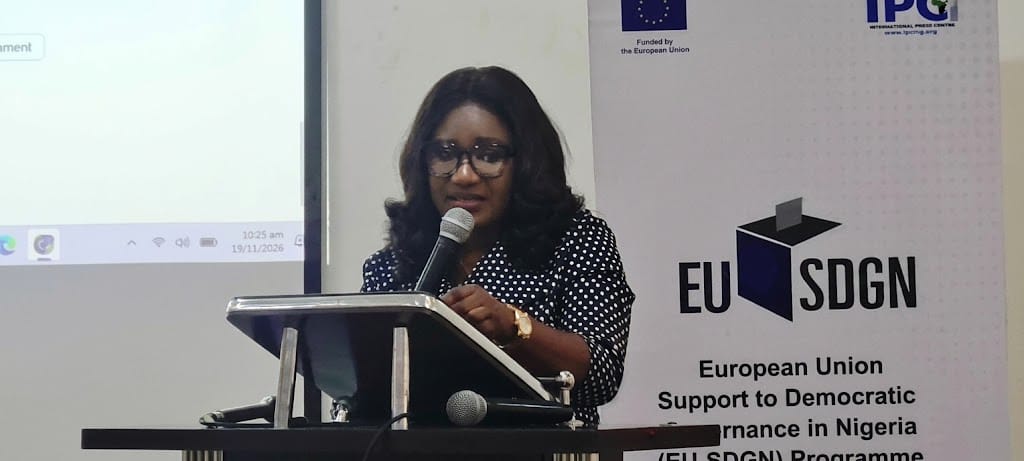
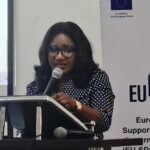
The Chairman of the Nigeria Union of Journalists (NUJ), FCT Council, Comrade Grace Ike, has urged journalists to prioritise fact-checking, accuracy and verification over speed as the country prepares for the 2027 general election.
Ike gave the charge at an interface organised by the International Press Centre (IPC) under Component 4 (Support to Media) of the European Union Support to Democratic Governance in Nigeria (EU-SDGN).
The Programme is themed, “2027 General Election in the Context of Democratic & Accountability Reporting: Scanning the Electoral Environment and Reporting Citizens’ Priority Concerns.”
Comrade Ike said the media had a critical role to play in strengthening democracy and accountability, particularly as the country approaches another general election, stressing the need for journalists to reposition themselves to effectively inform the electorate.
According to her, democracy cannot thrive where citizens are misinformed, while accountability cannot take root where the media merely reports events without interrogating political promises, policies and performance.
Ike urged journalists to move beyond reporting political rallies, defections, press statements and political drama, insisting that election reporting should focus more on the needs and concerns of citizens, including security, the economy, employment, education, healthcare, infrastructure and the cost of living.
She challenged journalists to scrutinise candidates’ promises and determine whether they were offering practical solutions to the challenges facing Nigerians or merely making political statements to gain votes.
“That is the essence of accountability reporting, putting the citizen, not the politician, at the centre of the electoral conversation,” she said.
The NUJ chairman identified misinformation, disinformation, hate speech, online manipulation, growing public distrust and safety risks confronting journalists as some of the challenges shaping the electoral environment.
She stressed that journalists must remain committed to professional standards, noting that verification and accuracy were essential to responsible election coverage.
“In this environment, fact-checking is no longer optional. Verification must come before speed. Accuracy must come before sensation,” Ike said.
She reaffirmed the commitment of the NUJ FCT Council to professional, ethical and responsible journalism, pledging continued collaboration with media partners to build journalists’ capacity, promote fact-checking, defend press freedom and ensure the safety and dignity of media practitioners.
Comrade Ike also called on journalists to uphold fairness, and resist attempts to use the media as a tool for propaganda, even as she urged the media to give adequate attention to the voices and concerns of women, young people, persons with disabilities and ordinary Nigerians whose needs are often overlooked outside election periods.
“As we scan the electoral environment, let us also scan ourselves. Are we ready? Are we equipped? Are we united in our commitment to democracy?” she asked.
She expressed confidence that the interface would strengthen participants’ reporting skills, deepen their understanding of democratic and accountability journalism and contribute to a more informed electorate and stronger democracy.
In his welcome address, the Executive Director of the International Press Centre, IPC, Dr. Lanre Arogundade, said the interface was organised to encourage journalists to reassess their approaches to electoral reporting and strengthen their capacity to provide credible, balanced and public-interest information.
Arogundade, represented by Mrs Melody Akinjiyan, said elections were not merely about political parties, candidates, campaigns and the announcement of results, but also about citizens’ aspirations, expectations and their right to make informed decisions.
He noted that the media has a responsibility to scrutinise political promises, monitor the performance of public officials, facilitate informed public discourse and ensure citizens’ voices are heard in the democratic process.
The IPC Executive Director warned that sensationalism, unverified claims, inflammatory rhetoric and the spread of misinformation and disinformation could undermine public confidence, deepen divisions and weaken democratic institutions.
He urged journalists to embrace issue-based and citizen-centred reporting, strengthen verification skills, promote conflict-sensitive journalism and ensure that women, youths and other underrepresented groups receive adequate attention in electoral coverage.
In a paper presentation on citizens’ priority concerns, a lecturer with the Department of Broadcasting Film and Multimedia Studies, University of Abuja, Dr. Sarah Gambo called on journalists to serve as watchdogs of society by reporting issues that directly affect citizens and holding political leaders accountable.
Gambo identified food security, transportation, unemployment, youth empowerment, poverty alleviation, social welfare, access to loans, freedom of expression, federalism, restructuring, technology, innovation and inclusion of women and youths as issues requiring sustained media attention.
She stressed that citizens’ priorities differ across communities, states and regions, urging journalists to understand the peculiar needs of their audiences rather than adopting a uniform approach to reporting electoral issues.
The lecturer encouraged journalists to document the challenges citizens face during voter registration and elections, including barriers to voting, electoral violence, intimidation, vote-buying and other practices capable of undermining the electoral process.
Gambo also advocated greater attention to persons with disabilities, urging the media to engage government and electoral stakeholders on measures to ensure that people with disabilities are not excluded from participating in elections.
In another paper presentation on integrating fact-checking into democratic and accountability reporting, a researcher and information disorder analyst, Mr Ahmad Aluko, said fact-checking was important to avoid heightened tensions arising from rumours.
Mr Aluko noted that journalistic content published without verification could cause an entire organisation to lose public trust and confidence.
The engagement also featured discussions on electoral reporting, information disorder, verification and citizens’ priority concerns, with resource persons expected to strengthen journalists’ capacity ahead of the 2027 general elections.
Participants at the interface pledged to apply the knowledge gained to their reportage ahead of the 2027 general elections, promising to promote factual, balanced, inclusive and issue-based reporting, prioritise verification over speed, amplify citizens’ concerns and hold political actors accountable, while resisting misinformation, hate speech and propaganda in the interest of credible elections and democratic development.