














Live News
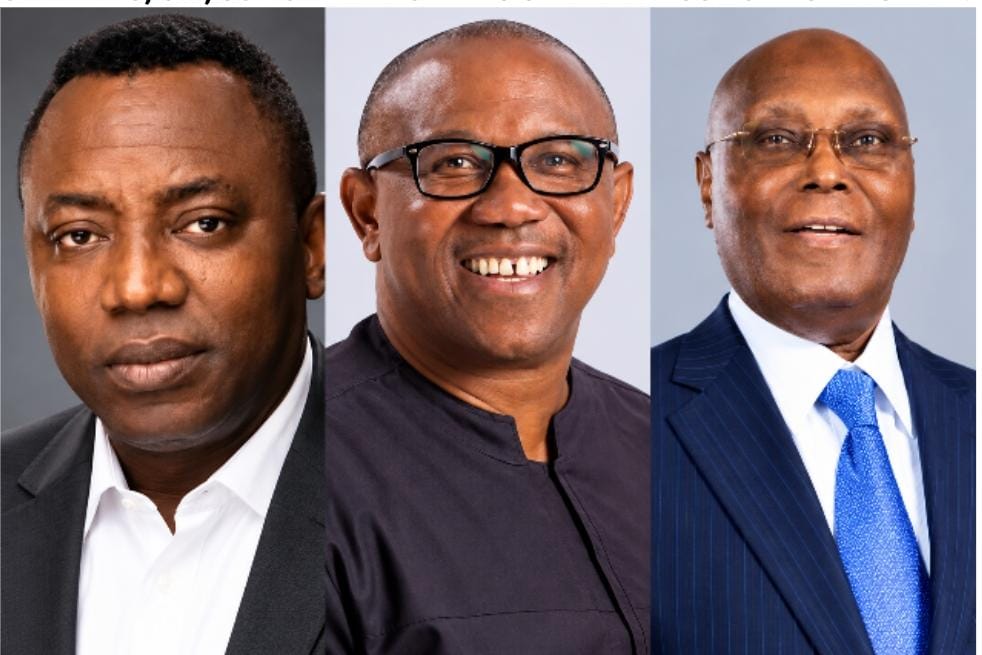
CAN ATIKU, OBI, SOWORE AND OTHERS UNITE WITHOUT ONE GIVING WAY?
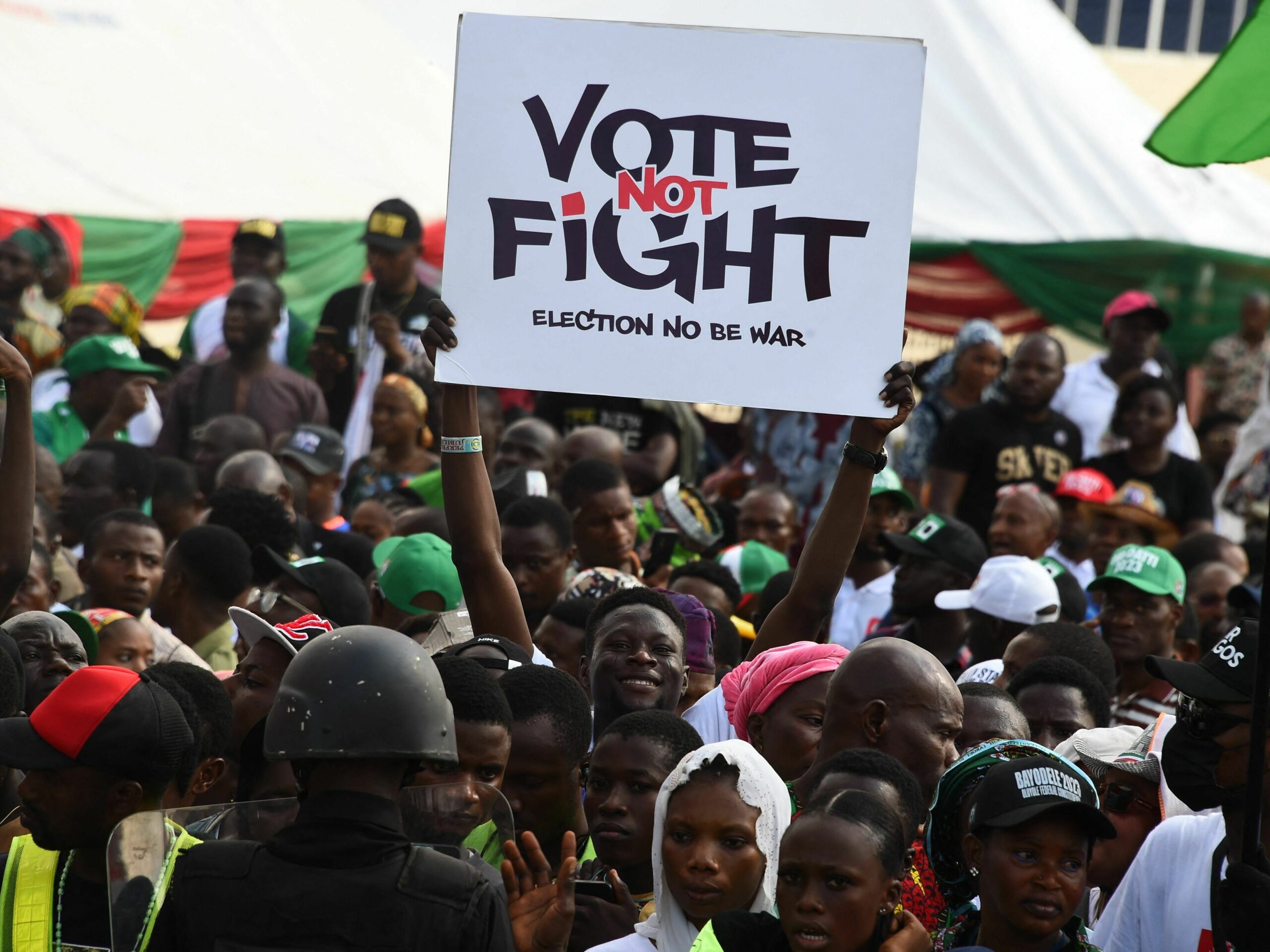
BEYOND THE SLOGANS: WHAT ARE NIGERIANS REALLY VOTING FOR?
Africa’S Forgotten Children: The Growing Crisis Of Child Labour, Trafficking And Exploitation
My son being blacklisted for taking second wife — Pete Edochie
Are Nigerians still voting for politicians or are they simply voting for a way out of the life politicians have created?
“Nigerians are tired of slogans and sentiment. They want a road map: how will you reduce kidnappings next year, how many jobs will you create, and how will you stop food prices from spiralling?” That was the blunt assessment of Dr. Chukwuma Okoli of Nextier as Nigeria’s political parties prepare for the 2027 election. His warning captures the uncomfortable reality facing the country’s political class: voters may be increasingly less interested in grand political language and more interested in whether the next government can make everyday life safer, cheaper and more bearable.
For years, Nigerian elections have been dominated by the familiar vocabulary of ethnicity, religion, regional loyalty and party machinery. But beneath the campaign rhetoric of “Renewed Hope,” national recovery, production and revolution is a much more immediate concern. Nigerians are asking what happens to the price of food, the cost of transport, the availability of electricity, the security of their communities and the possibility of finding decent work. The political argument may be conducted in Abuja, Lagos and on social media, but the real referendum is taking place in markets, homes, workshops, farms and transport stations across the country.
THE NUMBERS BEHIND THE ANGER
Recent voter-sentiment research reinforces that shift, although the figures vary according to the survey, question and population sampled. The latest Wave 2 Nigeria 2027 Voter Sentiment Tracker by SBM Intelligence, based on face-to-face interviews with 1,103 eligible voters across 12 states and the Federal Capital Territory, found that petrol had become the second-most cited national problem, at 18.2 percent. More significantly, 67.4 percent of respondents rejected the current petrol-pricing policy and supported restoring the subsidy, compared with 19.2 percent who supported the existing policy direction. SBM cautioned that its survey is a snapshot of stated sentiment and should not be treated as a prediction of the eventual 2027 electorate.
The regional differences are even more revealing. In the South-East, insecurity was cited by 62.6 percent of respondents as the leading concern, while insecurity also dominated in the North-Central zone at 47.5 percent. In the North-West, insecurity narrowly led at 25 percent, followed by petrol at 24 percent. In the South-West and South-South, petrol was the leading concern, at 30.5 percent and 29.1 percent respectively. In the North-East, debt topped the list at 28.3 percent, followed by insecurity at 17.1 percent.
The message is difficult for politicians to ignore: there is no single Nigerian voter experience. A campaign message that resonates in Lagos may sound irrelevant in Maiduguri. A promise about petrol may dominate political conversations in the South-West while insecurity overwhelms every other issue in parts of the South-East or North-Central. Nigeria’s political geography is as complicated as its economic reality.
And yet the common thread is remarkably simple.
People want relief.
WHAT THE CANDIDATES ARE OFFERING
For Bola Tinubu and the APC, the central argument is that Nigeria has already endured the hardest stage of economic reform and needs continuity to see those reforms produce results. The administration’s removal of the petrol subsidy and changes to the foreign-exchange regime are defended as necessary measures rather than temporary political choices. But the government now faces the harder political task of convincing Nigerians that the sacrifice is producing measurable benefits. The latest SBM findings show just how difficult that argument has become, with petrol emerging as a major political grievance.
Atiku Abubakar has moved directly into that space. The ADC candidate has said he would restore the petrol subsidy, making relief from fuel costs a central part of his economic pitch. His argument is that government must respond to the immediate pressure on households, transport operators and businesses. Critics can challenge the fiscal sustainability of such a policy, but politically it speaks directly to a problem voters can see every time they visit a filling station.
Peter Obi’s proposition is different. His political message has focused heavily on moving Nigeria from consumption towards production, with emphasis on agriculture, manufacturing, electricity, jobs and security. That puts his campaign close to the practical concerns identified repeatedly in voter research. But the question surrounding Obi is not simply whether his message resonates. It is whether his political movement can build enough national organisation to turn that resonance into votes across thousands of polling units.
Sowore occupies the most radical space. His campaign proposes a ₦500,000 living wage, major expansion of public housing, free education and fundamental changes to the political and economic system. These proposals speak directly to the scale of frustration among citizens who believe incremental reform is no longer enough. But the more ambitious the promise, the more voters have a right to ask the difficult questions: how will it be financed, who will implement it and how quickly can it change people’s lives
THE GAP BETWEEN SLOGANS AND SURVIVAL
This may ultimately be the most important political divide of 2027. The political class is still campaigning through parties, governors, alliances, structures and regional calculations, while voters are increasingly judging politics through personal experience.
Nextier’s Okoli put that contradiction sharply: “Growth on paper is useless if people are choosing between fuel for their generators and food on the table.”
That sentence may explain the entire election better than a hundred campaign speeches.
A government can point to economic growth, investment figures and reform programmes. But a trader worried about transport costs, a parent struggling with school fees, a graduate searching for work or a family living under the threat of kidnapping measures government performance differently.
The political class speaks in statistics.
The voter experiences consequences.
That is why the 2027 election may become a referendum on something much more basic than ideology. Nigerians are asking whether the next president can make them safer, whether their income can stretch further, whether electricity can become more reliable, whether jobs can become more accessible and whether government can finally become visible in the ordinary citizen’s life.
The candidates may campaign on different philosophies, but the electorate’s demand is increasingly concrete.
Keep us safe. Give us work. Make life affordable. Make government work.
THE REAL QUESTION BEYOND THE SLOGANS
The danger for every candidate is assuming that traditional political arithmetic will be enough. Nigeria’s political system still rewards control of structures, alliances and influential political actors. But the electorate is sending another message: results matter.
The question for 2027 is therefore not simply who has the strongest party machinery or the loudest campaign. It is who can convince Nigerians that their programme is credible enough to change the conditions of everyday life.
Beyond the slogans, Nigerians are not simply voting for ethnicity, religion or party loyalty. Many are voting for relief, safety, jobs, electricity and the hope that the next four years will feel different from the last three.
And that may be the most dangerous development for a political class accustomed to winning elections with promises.
The Nigerian voter is no longer asking only, “Who are you?” The harder question is: “What will you actually change in my life?”