


















Live News
CAN ATIKU, OBI, SOWORE AND OTHERS UNITE WITHOUT ONE GIVING WAY?
BEYOND THE SLOGANS: WHAT ARE NIGERIANS REALLY VOTING FOR?
Africa’S Forgotten Children: The Growing Crisis Of Child Labour, Trafficking And Exploitation
My son being blacklisted for taking second wife — Pete Edochie
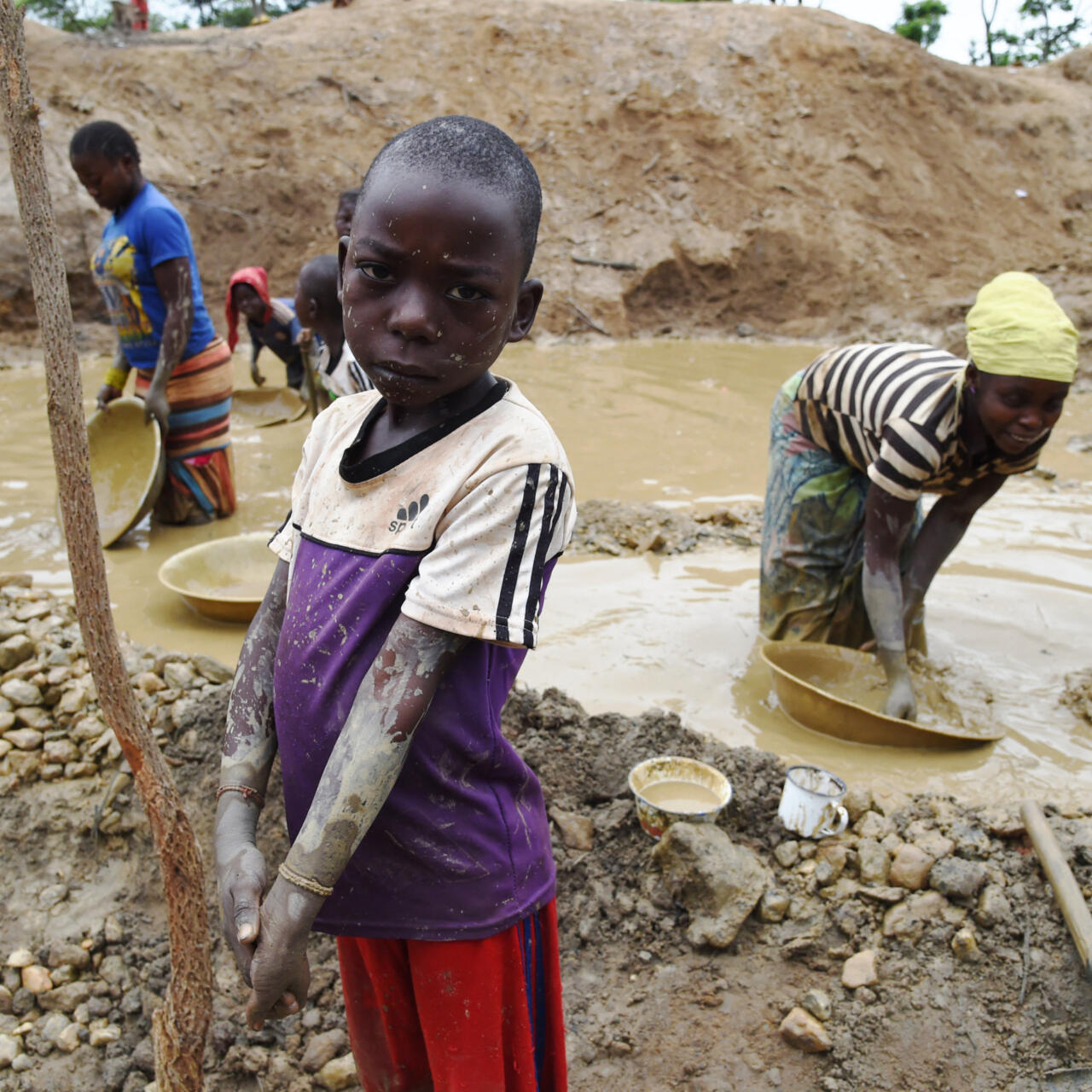
Africa’S Forgotten Children: The Growing Crisis Of Child Labour, Trafficking And ExploitationAt dawn, while other children are preparing for school, a young boy walks through a crowded African market carrying a basket heavier than his small body should have to bear. His school uniform remains folded somewhere at home. His books are gathering dust. By the time other children return from their classrooms, he may still be selling goods, carrying loads or searching for another opportunity to earn money.
Elsewhere, a young girl wakes before sunrise to clean a stranger’s house, prepare meals and care for children who have the privilege of attending school. She is told that she should be grateful because she has somewhere to sleep and something to eat.
Neither child is living the childhood they deserve.Their experiences reflect a crisis that governments frequently acknowledge but have struggled to eliminate.
Africa’s children are being failed at industrial scale.
The Numbers Behind The Silence
According to the 2024 global estimates published by the International Labour Organization (ILO) and UNICEF in June 2025, approximately 138 million children worldwide were engaged in child labour in 2024. Of these, 54 million were involved in hazardous work that threatens their health, safety and development.
Sub-Saharan Africa carries the heaviest burden, accounting for approximately 87 million children, nearly two-thirds of the global total. About one in five children in the region is affected.
There has been progress: the regional prevalence rate declined from 23.9 per cent in 2020 to 21.5 per cent in 2024. However, population growth has meant that the absolute number of affected children has remained largely unchanged.
Agriculture accounts for 61 per cent of child labour globally, followed by services at 27 per cent and industry at 13 per cent.
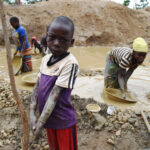
Behind these figures are children working on farms, in mines, markets, factories and private households when they should be learning, playing and developing.
When Poverty Becomes A Trafficker’S Opportunity
For some families, sending a child away is presented as an opportunity.
A relative promises education. An employer offers accommodation and financial support. A recruiter claims that a child will receive training and a better future in another city or country.
But sometimes the promise becomes a trap.
Children are transported into domestic servitude, forced begging, agricultural labour, commercial exploitation and other forms of abuse.
Nigeria illustrates how complex this problem has become. The 2024 US Trafficking in Persons Report documented children exploited in granite quarries, artisanal mines, domestic work, street vending, agriculture and forced begging. It also described cases involving children placed in domestic work by impoverished families who believed they were securing better opportunities for them.
The problem does not stop at national borders. Trafficking networks move vulnerable children across West and Central Africa, exploiting weak protection systems and the desperation of families.
The United Nations Office on Drugs and Crime’s 2024 global report also found that children represented more than 60 per cent of detected trafficking victims in sub-Saharan Africa. Forced labour, begging and other forms of exploitation featured prominently.
For traffickers, a vulnerable child can become a source of profit. For the child, the consequences can last a lifetime.
The Children Who Never Return To The Classroom
Perhaps the most damaging consequence of child labour is the education it steals.
A child who spends the day working cannot enjoy the same opportunities as one who attends school consistently. Exhaustion, injury, abuse and psychological trauma can further undermine development.
Girls may face domestic servitude, sexual exploitation and forced marriage. Boys may be exposed to dangerous mining, agricultural work, forced begging and recruitment by armed groups.
Conflict makes the situation worse. Displacement separates children from their families, interrupts schooling and exposes them to recruiters and criminal networks.
In Nigeria and other conflict-affected parts of the continent, attacks on communities and schools have intensified fears about children’s safety.
The tragedy is that exploitation often begins where protection is weakest: in poor households, displaced communities and places where education is inaccessible or unaffordable.
The Law Exists. Where Is The Protection?
African governments have signed international agreements and established laws intended to protect children.
The ILO conventions on minimum working age and the worst forms of child labour, alongside the African Charter on the Rights and Welfare of the Child, provide important legal safeguards.
Yet legislation alone cannot rescue a child working in a dangerous mine or living under the control of an abusive employer.
Enforcement remains inconsistent. Investigations may not reach the people organising exploitation. Victims may be rescued without receiving adequate shelter, education, psychological care or long-term support.
Some children return to the same conditions because their families have no alternative means of survival.
The world also missed its 2025 target of eliminating child labour. That failure should force governments to examine not just their promises but the resources and political commitment behind them.
Who Profits From Africa’S Exploited Children?
There is an uncomfortable question that governments and businesses must confront: who benefits when children provide cheap or unpaid labour?
Employers who avoid paying adult wages, traffickers who sell access to vulnerable children, and businesses that ignore abusive supply chains all contribute to an environment in which exploitation can survive.
Poverty is a major driver, but it is not an excuse for abuse.
Governments must strengthen social protection, provide accessible education, support struggling households and prosecute traffickers. Businesses must investigate their supply chains and reject products linked to forced or illegal child labour.
Traditional and religious institutions must also challenge practices that expose children to exploitation, while communities must report abuse rather than conceal it.
The Call To Action: Give Children Back Their Childhood
African governments must stop treating child protection as an occasional campaign.
They must invest in free, quality education, strengthen labour inspections, improve border cooperation, fund shelters and provide rehabilitation for survivors.
Law enforcement agencies must investigate trafficking networks and hold organisers and beneficiaries accountable, not merely rescue victims at the bottom of the chain.
Parents and communities must be supported so that poverty does not force them into decisions that place children at risk.
Most importantly, governments must publish measurable progress: children rescued, traffickers prosecuted, victims rehabilitated and vulnerable families supported.
The Final Question: Who Will Speak For Africa’S Children?
A continent cannot claim a prosperous future while millions of its children are denied the opportunity to experience childhood.
Every child working in a dangerous mine, every girl trapped in domestic servitude and every boy forced to beg represents more than a social statistic. Each represents a life whose opportunities are being stolen.
Africa’s children cannot wait for another declaration, another conference or another international deadline.
A child should not have to earn the right to eat, sacrifice education to survive or endure exploitation because adults have failed to protect them.
The measure of African development must include the safety, education and dignity of its youngest citizens.
Because the future of Africa is not being built only in presidential offices, boardrooms or parliament buildings. It is also being decided in the homes, farms, streets and workplaces where millions of children are waiting for someone to defend their childhood.