
























Live News
Over 9,000 Ebola cases recorded in Congo
City deserve to keep titles even if guilty of financial breaches — Enrique
Tinubu names opposition governors in 2027 re-election campaign council
United can weather the storm after worst start in 40 years — Carrick
Report: Nigeria’s Multidimensional Poverty Rises to 38.7% Under Tinubu
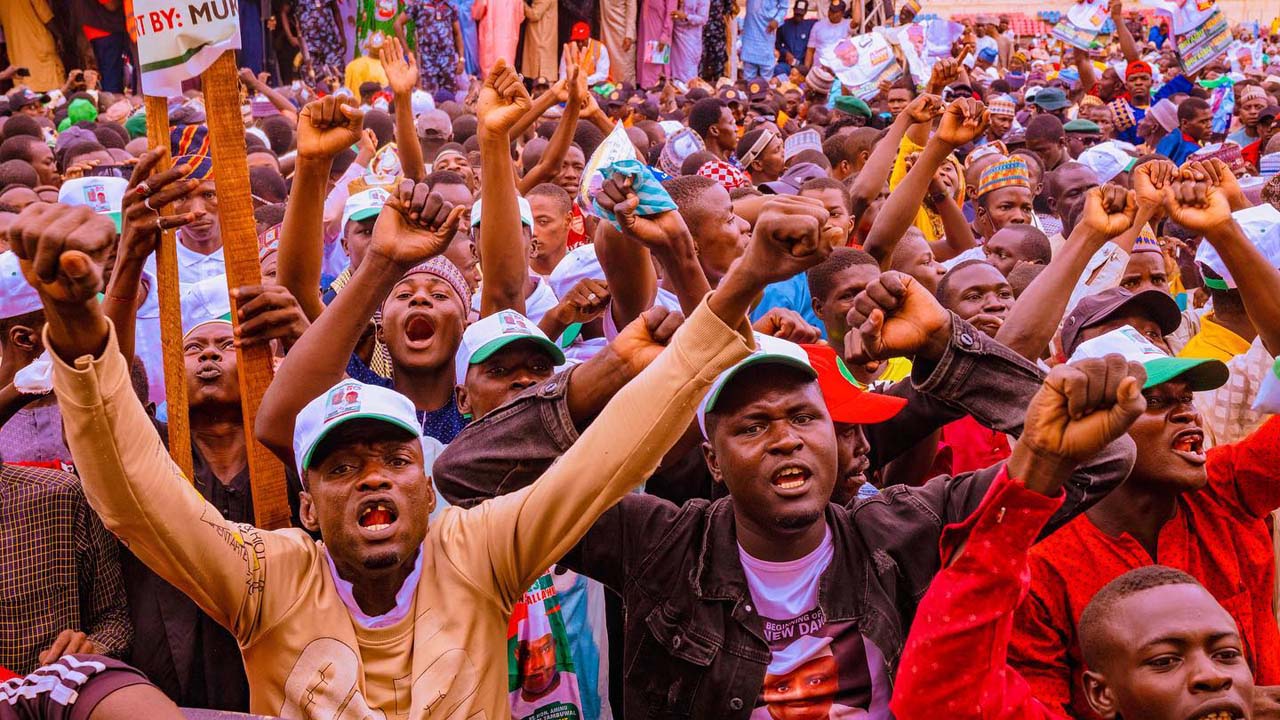
“I voted for the first time because I believed my voice could help shape Nigeria’s future,” 25-year-old Tobi recalled after the 2023 general elections. “Today, many of my friends say they won’t bother voting again. They don’t believe anything will change.”
His frustration reflects a growing sentiment among many young Nigerians who once viewed political participation as a pathway to change but are now questioning whether the system truly responds to their aspirations.
This disillusionment is particularly concerning because Nigeria is one of the world’s youngest nations. According to the National Population Commission and the United Nations Population Fund (UNFPA), more than 70 percent of Nigeria’s population is under the age of 30, giving young people enormous potential to shape the country’s democratic future. Yet the enthusiasm that surrounded youth participation during the 2023 elections has increasingly given way to frustration over governance, economic hardship and declining trust in public institutions.
The warning signs are already evident. According to the NDI/IRI Joint International Election Observation Mission Final Report on Nigeria’s 2023 general elections, the polls recorded the lowest voter turnout in Nigeria’s modern democratic history, with only 27 percent of registered voters casting their ballots.
While the report acknowledged improvements in electoral competitiveness and youth engagement, it concluded that logistical failures, technological challenges, political violence and declining public confidence undermined citizens’ trust in the electoral process. The observers warned that restoring faith in democracy would require genuine commitment from government, political parties and electoral institutions to strengthen democratic governance and rebuild public confidence.
Yet declining electoral participation does not necessarily mean Nigerian youth have abandoned democracy. The latest Afrobarometer Round 10 Survey, conducted in 2024, found that 64 percent of Nigerians still believe democracy is preferable to any other form of government, despite widespread dissatisfaction with governance.
At the same time, 80 percent of respondents said corruption had increased “somewhat” or “a lot” over the previous year, illustrating the growing disconnect between democratic ideals and citizens’ everyday experiences.
Economic realities have only deepened this frustration. Young Nigerians face rising unemployment, inflation, a high cost of living and limited opportunities despite being among the country’s most educated and digitally connected generations.
Across Africa, similar pressures have fuelled youth-led protests demanding greater accountability. The Guardian reported that millions of young Africans are increasingly losing trust in political leaders as economic hardship, unemployment and inequality continue to outpace government responses. For many young Nigerians, politics is no longer judged by campaign promises but by whether it delivers jobs, security and a better quality of life.
Ironically, while confidence in political institutions appears to be declining, young Nigerians remain highly engaged in civic conversations. Social media platforms have transformed political participation, allowing young people to organise campaigns, challenge public officials and mobilise around national issues.
The #EndSARS movement demonstrated the ability of Nigerian youth to shape public discourse and demand accountability outside traditional political structures. During the 2023 elections, digital mobilisation also played a significant role in increasing youth interest in the electoral process, particularly through grassroots campaigns and online advocacy.
Recent research also challenges the long-standing assumption that African youth are politically apathetic. A 2025 study published in the journal African Renaissance, drawing on Afrobarometer data, found that youth interest in politics and democracy across Africa increased from 55 percent in 2015 to 63 percent in 2023.
Rather than disengaging completely, many young people are participating differently by using digital platforms, advocacy campaigns and community initiatives to influence governance beyond the ballot box.
Nevertheless, participation alone cannot sustain democracy if institutions fail to respond. The Afrobarometer African Insights 2025 report found that young Africans remain less likely than older generations to vote, attend community meetings or identify with political parties, although they are more willing to engage in protests when they believe governments are unresponsive.
The report concludes that meaningful citizen engagement depends not only on civic participation but also on governments demonstrating responsiveness, transparency and accountability.
For Nigeria, rebuilding young people’s confidence in politics requires more than encouraging voter registration every election cycle.
It demands credible elections, stronger institutions, transparent governance and policies that address youth unemployment, education, entrepreneurship and political inclusion.
Initiatives such as the Not Too Young To Run Act have opened new opportunities for younger candidates, but structural barriers including the high cost of elections, political godfatherism and limited access to campaign financing continue to discourage many aspiring young leaders.
The future of Nigeria’s democracy will largely be determined by whether its young people continue to believe that political participation can produce meaningful change.
A generation that loses faith in democratic institutions may withdraw from formal politics altogether or seek alternative ways of expressing its frustrations. Neither outcome strengthens democracy.
Young Nigerians have already demonstrated that they possess the energy, creativity and determination to shape national conversations. The challenge now lies with political leaders and public institutions. If they can deliver transparent elections, responsive governance and tangible economic opportunities, trust can gradually be rebuilt. But if disappointment continues to replace hope, Nigeria risks losing not only the confidence of its youth but also one of democracy’s most powerful assets: citizens who still believe their voices matter.