





























More than 706,000 approved admission spaces in Nigeria’s tertiary institutions were left vacant in 2025, even as millions of young Nigerians sought admission, a new report has found.
The policy brief by the iRead To Live Initiative said 1,009,736 out of 1,716,154 approved admission spaces were filled during the 2025 admission cycle, leaving 706,418 unused.
This represents an overall admission rate of 58.8 per cent, meaning more than 40 per cent of the available spaces were not taken.
The findings are contained in an August 2026 policy brief titled “The Admissions Gap: Who Gets into Nigeria’s Tertiary Institutions, and Why It Matters.” It was written by the organisation’s Executive Director, Jacob Sule.
The report is the first publication of the iRead To Live Initiative as a higher education policy think tank.
The organisation said the research was carried out independently and was not funded or commissioned by any government agency, tertiary institution or commercial organisation.
The report found a wide gap between universities and other tertiary institutions.
Universities filled 74 per cent of their approved admission spaces, while other tertiary institutions filled only 34.3 per cent.
In universities alone, 785,180 out of 1,060,919 approved spaces were filled, leaving 275,739 vacant.
Polytechnics and colleges of education recorded much lower admission rates, filling only about one-third of their approved spaces.
The report said the figures showed that Nigeria’s tertiary institutions did not run out of admission spaces in 2025.
Instead, hundreds of thousands of approved spaces were left unused, even as many candidates struggled to secure admission.
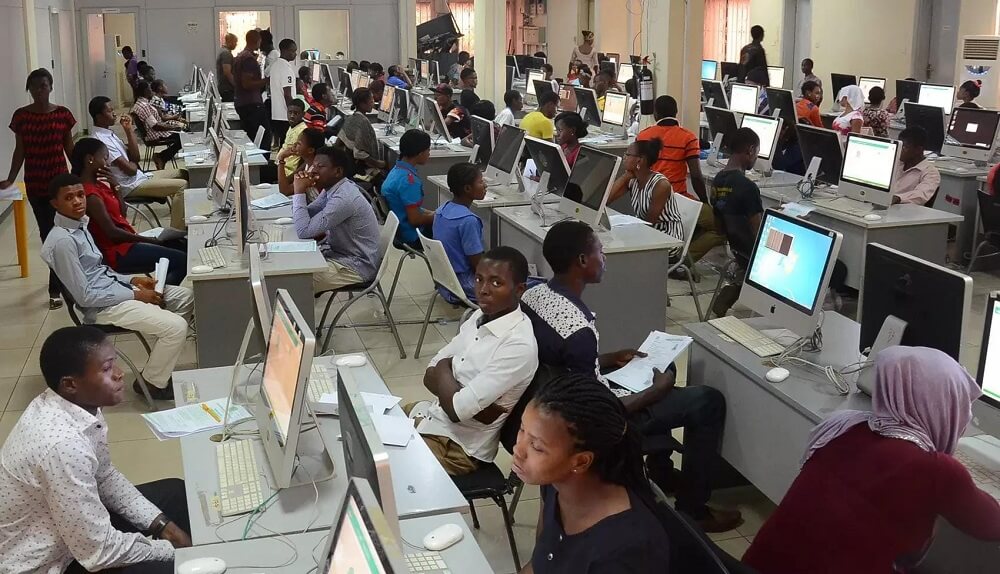
The development comes as 2,243,816 candidates registered for the 2026 Unified Tertiary Matriculation Examination (UTME).
However, the report noted that the 2026 admission process was still ongoing when the study was prepared, so the 2026 registration figures could not be directly compared with the completed 2025 admission figures.
The initiative described the situation as a major problem in Nigeria’s tertiary education system.
It said the problem was not simply a lack of admission spaces but a mismatch between where the spaces are available and what candidates want, qualify for and can afford to reach.
The group also raised concerns about the quality and consistency of admission data.
It noted that another JAMB table based on individual applicants gave slightly different figures for the same admission cycle. It said this showed the need for clearer and more detailed data from the Joint Admissions and Matriculation Board (JAMB).
The organisation recommended that JAMB publish admission and performance data, while protecting candidates’ privacy, based on state, local government area, geopolitical zone, gender, subject and institution.
It said such data would help the government, institutions and researchers identify areas where admission opportunities are lacking.
The group also asked JAMB to publish the evidence used to determine the agreed national cut-off mark, especially for STEM and non-STEM courses.
It further recommended that JAMB publish an Annual Admissions and Access Report after every admission cycle.
According to the report, the annual publication should bring together applicant-level admission figures and institutional capacity and provide consistent data from one year to another.
The initiative also recommended that JAMB test and independently assess its proposed Bring Your Own Device (BYOD) option before introducing it nationwide.
It called for controlled trials, independent security testing and clear standards on devices, security and access to ensure that candidates without suitable personal devices are not disadvantaged.
It also urged JAMB to improve access to computer-based testing and preparation support across the six geopolitical zones and provide a free readiness programme for all candidates.