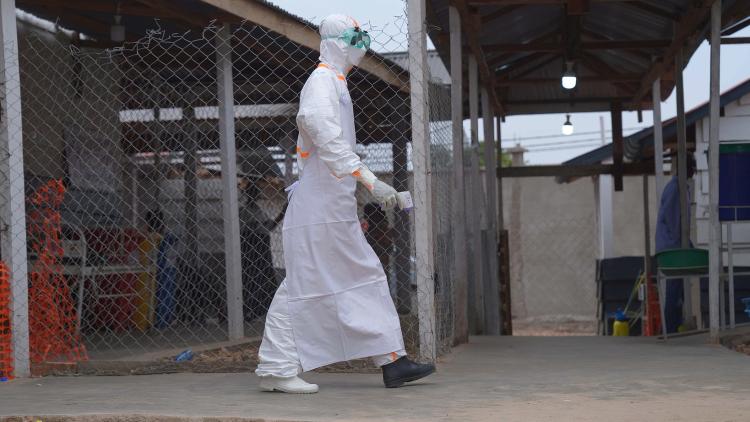







 At a teaching hospital in southwest Nigeria, a senior consultant completed ward rounds with only two resident doctors covering what should have required six. The pediatric wing was overcrowded. The radiology machine had been down for weeks. The consultant quietly admitted that three of his brightest residents had recently relocated to the United Kingdom. Two more were preparing documentation for Canada.
“We are training for export,” he said. “Not for Nigeria.”
That statement captures one of the most consequential crises facing Africa’s most populous nation. Nigeria spends between twenty one thousand and fifty nine thousand dollars to train a single doctor. Yet thousands leave annually, effectively subsidising healthcare systems in the United Kingdom, the United States, Canada, and Australia.
This is not merely migration. It is systemic hemorrhage.
The Scale of the Brain Drain
Between 2014 and 2024, more than 15,000 Nigerian doctors emigrated. In 2024 alone, approximately 4,700 doctors left the country. Current estimates indicate that over 50,000 Nigerian trained doctors now practice abroad.
The consequences are stark. Nigeria’s doctor to patient ratio has fallen to roughly 1 to 10,000, far below the World Health Organization’s recommended benchmark of 1 to 600.
While Nigeria produces between 2,000 and 3,000 doctors annually, the outflow consistently outpaces retention. Surveys show that over 90 percent of medical students express intention to practice abroad. Verification requests for foreign licensing examinations continue to surge.
If trends persist, projections suggest an additional 15,000 doctors could leave by 2036.
The pipeline is clear. Train locally. Serve briefly. Exit permanently.
Infrastructure Collapse and Professional Frustration
Migration does not occur in isolation. It is intertwined with infrastructure decay and systemic dysfunction.
Recent assessments indicate that nearly 80 percent of public health infrastructure operates below optimal capacity. Many facilities lack consistent electricity, running water, modern diagnostic equipment, and essential drugs. Rural hospitals face even deeper neglect.
Health system capacity hovers around 45 percent of functional potential. Nigeria’s Universal Health Coverage index remains below continental averages.
Under such conditions, medical professionals face impossible choices. Perform surgery without reliable power. Manage emergencies without adequate equipment. Treat patients who cannot afford out of pocket costs because insurance coverage reaches barely 5 percent of the population.
Professional morale erodes when competence is constrained by environment.
Corruption and Resource Mismanagement
Financial mismanagement compounds structural decay. Nigeria allocates trillions of naira to healthcare annually, with the 2025 budget dedicating approximately 2.48 trillion naira, representing over 5 percent of federal expenditure.
Yet outcomes remain poor. Illicit financial flows drain an estimated 17 to 18 billion dollars annually from the broader economy. Within healthcare, past scandals such as misappropriation in national insurance schemes and questionable loan allocations have undermined trust.
A 1.57 billion dollar World Bank loan intended to strengthen healthcare systems faced scrutiny over utilization gaps.
When funds meant for equipment procurement, facility upgrades, and personnel welfare are diverted or delayed, frontline workers absorb the impact. Delayed salaries, unpaid allowances, and limited professional development opportunities fuel resentment.
Corruption does not only steal money. It accelerates migration.
The Strike Migration Loop
The Nigerian Association of Resident Doctors has repeatedly warned of escalating brain drain. Between 2014 and 2025, over 15,000 doctors were lost. Strikes across tertiary institutions in 2025 disrupted dozens of facilities, costing billions in service interruptions.
During industrial actions, surgical volumes drop, waiting times increase by over 50 percent, and patient outcomes worsen.
These disruptions reinforce the perception among young doctors that the system lacks stability. Each strike cycle deepens the strike migration loop. Poor conditions trigger industrial action. Industrial action destabilises care. Destabilisation prompts more departures.
The cycle sustains itself.
Human Cost and Economic Consequences
Beyond workforce depletion lies a broader economic toll. Nigeria reportedly loses over one billion dollars annually to outbound medical tourism as citizens seek treatment abroad.
Out of pocket spending constitutes nearly 70 percent of total health expenditure. This pushes vulnerable households into poverty and discourages early care seeking.
Maternal and child mortality rates remain high relative to global benchmarks. Approximately 140,000 child deaths annually are linked indirectly to systemic failures exacerbated by corruption and underinvestment.
When doctors emigrate, remaining staff face heavier workloads. Overburdened systems reduce quality of care, which further erodes public trust and encourages wealthier citizens to seek treatment overseas.
The nation simultaneously exports talent and imports healthcare services at enormous cost.
Global Pull and Domestic Push
High income countries actively recruit foreign trained health professionals to offset their own workforce shortages. Competitive salaries, structured career progression, advanced research opportunities, and safer working conditions present compelling alternatives.
Nigeria’s push factors are equally strong. Low remuneration relative to cost of living. Limited residency slots. Obsolete equipment. Insecurity affecting both urban and rural practice environments.
For many doctors, migration is framed not as abandonment but as survival.
Breaking the Cycle
Reversing medical migration requires structural reform rather than temporary incentives.
First, anti-corruption enforcement within healthcare procurement and insurance systems must be strengthened. Transparent digital tracking of health expenditure can reduce diversion.
Second, infrastructure modernisation is critical. Reliable electricity, diagnostic equipment, and drug supply chains are non-negotiable foundations for retention.
Third, remuneration reform must align with professional expectations and inflation realities. Competitive pay alone will not stop migration, but persistent underpayment guarantees it.
Fourth, expanded postgraduate training slots and research funding can anchor talent domestically.
Fifth, diaspora engagement strategies can encourage short term return missions and collaborative partnerships without permanent loss of expertise.
Conclusion
Nigeria’s healthcare crisis is not merely a workforce shortage. It is a systemic failure loop.
The country trains doctors at significant cost, loses them to migration, and struggles with weakened facilities that further drive departures. Corruption, infrastructure decay, and policy inconsistency intertwine to produce a cycle that undermines Universal Health Coverage ambitions.
Unless institutional integrity improves and working conditions become sustainable, the export of medical talent will continue.
Nigeria does not lack skilled professionals. It lacks a system capable of retaining them.
Breaking the cycle demands accountability, investment, and political will. Without them, the nation will continue to train doctors for the world while its own hospitals remain understaffed and overwhelmed.