




























Live News
City to win appeal against financial charges — Maresca
Thieves stole wine worth €5m in Italy
Raphinha will miss Barcelona’s next two matches — Flick
Hurkacz knocks out Djokovic of Shanghai Masters in first game
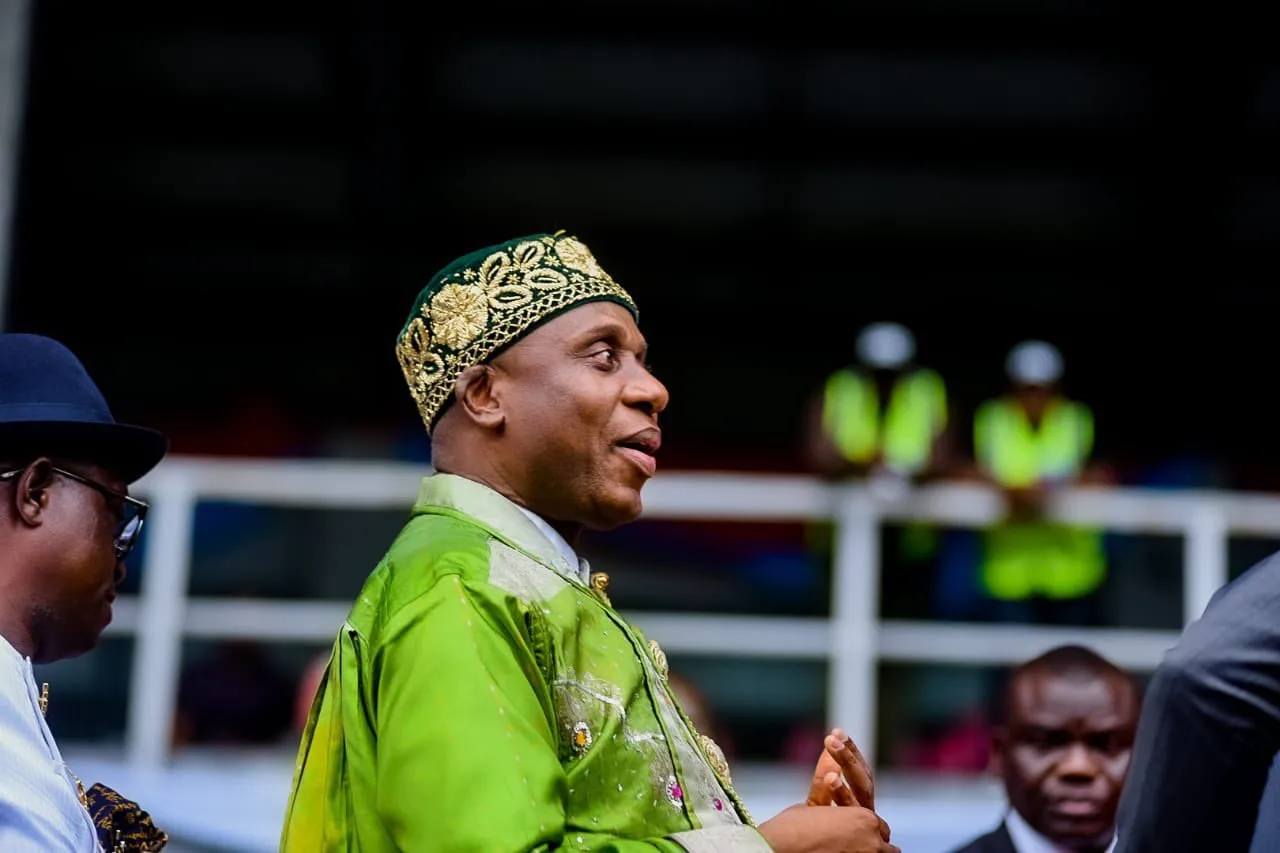
Only mad people can vote for Tinubu — Amaechi
Triple Crown for Julius Berger at Eurocham Nigeria Awards 2026
How Did Nigeria Become a Nation Where the Constitution Is Often Weaker Than Political Interests?
“When Chinedu cast his first vote after Nigeria’s return to civilian rule in 1999, he believed democracy would steadily deliver what decades of military rule could not: accountable leadership, stronger institutions and a government bound by the Constitution. More than two decades later, he still votes, but his optimism has faded. Like millions of Nigerians, he watches political crises unfold, court judgments spark controversy, lawmakers switch political parties without consequence and public institutions struggle to command public confidence. His question is no longer whether Nigeria is a democracy. It is whether democratic institutions still have enough strength to protect democracy itself.”
Nigeria proudly describes itself as Africa’s largest democracy. Since the end of military rule in 1999, the country has conducted successive general elections, witnessed peaceful transfers of power between political parties and maintained a constitutional framework that guarantees separation of powers, fundamental human rights and the rule of law. On paper, these are the defining characteristics of a functioning democratic state. Yet for many Nigerians, democracy increasingly feels procedural rather than substantive. Elections continue to take place, but concerns about governance, accountability, institutional independence and constitutional compliance have become recurring features of national discourse. This has given rise to an uncomfortable question: has Nigeria strengthened its democracy, or has political power gradually become more influential than the very institutions designed to regulate it?
The phrase “criminals and cabals” has become common in political conversations, newspaper headlines and social media debates. It reflects a widespread perception that a small network of powerful political and economic actors exerts disproportionate influence over public decisions, often beyond public scrutiny. Whether that perception is entirely accurate is open to debate, but its growing popularity reveals something equally significant: declining public trust in democratic institutions. When citizens begin believing that informal political interests carry greater weight than constitutional processes, democracy itself begins to lose credibility.
Democracy Is More than Elections
Nigeria deserves recognition for sustaining uninterrupted civilian rule for more than two decades, a remarkable achievement considering its history of military interventions. However, democracy was never intended to be measured solely by the regular conduct of elections. A healthy democracy requires independent institutions, respect for constitutional limits, transparent governance, judicial independence, legislative oversight and equal application of the law.
The Constitution is designed to be the highest legal authority in the country. Every public office, institution and elected official derives legitimacy from it. Yet public debates frequently raise questions about whether constitutional principles are consistently respected or whether political expediency sometimes takes precedence. Disputes over executive powers, legislative independence, judicial autonomy, party defections, appointments and electoral processes have repeatedly fuelled concerns that political interests often overshadow constitutional ideals.
When Institutions Become Vulnerable
Strong democracies are built on institutions rather than personalities. Institutions provide continuity, enforce accountability and prevent excessive concentration of power. When institutions become weak, governance increasingly depends on the character of individual leaders instead of established rules.
Several governance indicators continue to suggest that Nigeria faces institutional challenges. The World Bank’s Worldwide Governance Indicators consistently identify weaknesses in government effectiveness, rule of law, regulatory quality and control of corruption. Likewise, the Mo Ibrahim Foundation’s Ibrahim Index of African Governance has repeatedly highlighted concerns about security, accountability and public administration in several African countries, including Nigeria. These assessments do not suggest that democratic institutions no longer exist. Rather, they indicate that their effectiveness remains under significant pressure.
The Growing Influence of Political Interests
One of the defining characteristics of constitutional democracy is that no individual or political group should stand above the law. Yet public perception increasingly suggests that political influence can affect outcomes that ought to be determined solely by legal and constitutional principles. High profile political disputes often become prolonged battles not only in courtrooms but also in the court of public opinion, where accusations of interference, selective justice and unequal treatment frequently emerge.
Such perceptions, whether ultimately proven or not, have consequences. Democracy depends not only on fairness but also on public confidence that fairness exists. When citizens begin questioning whether institutions operate independently, trust gradually declines, and rebuilding that trust becomes far more difficult than preserving it.
Corruption and Patronage Continue to Undermine Democracy
No discussion about Nigeria’s democratic journey can ignore corruption. According to Transparency International’s 2024 Corruption Perceptions Index, Nigeria scored 26 out of 100, ranking 140th out of 180 countries. Corruption is not merely an economic problem. It weakens institutions, distorts public policy, reduces confidence in government and creates opportunities for patronage networks to flourish.
Political patronage has long shaped Nigeria’s governance landscape. Appointments, contracts and political alliances are often viewed through the lens of loyalty and influence rather than merit alone. While patronage exists in many democracies, it becomes particularly damaging when it weakens accountability or undermines constitutional institutions.
Is the Constitution Becoming Secondary?
The Constitution remains Nigeria’s supreme law, yet its authority ultimately depends on consistent implementation. Constitutional provisions cannot defend themselves. They rely on leaders willing to respect legal limits, institutions prepared to enforce them and citizens determined to demand accountability.
Whenever constitutional compliance becomes selective or politically convenient, democratic institutions inevitably weaken. Laws begin to appear negotiable, while political calculations become increasingly dominant. That perception can be just as damaging as actual constitutional violations because democracy relies heavily on public confidence in the integrity of its institutions.
Can Nigeria Reverse the Trend?
History suggests that institutional decline is not irreversible. Countries such as Botswana and Mauritius have demonstrated that sustained reforms, independent institutions and consistent respect for constitutional governance can strengthen democratic systems over time. Their experiences show that institutional resilience is built gradually through accountability, transparency, judicial independence and professional public administration.
Nigeria possesses the legal framework required for democratic governance. What remains uncertain is whether the country’s political culture will consistently reinforce that framework or continue allowing short term political interests to test its limits.
Conclusion
Is Nigeria now run by “criminals and cabals”?
The evidence does not support reducing a nation of more than 200 million people or its entire political system to such a sweeping conclusion. However, the persistence of corruption, patronage, institutional weakness and declining public trust has created an environment in which many Nigerians increasingly believe that informal political interests often exert greater influence than constitutional ideals.
That perception should concern every democrat.
The greater danger is not simply that powerful interests may influence governance. The greater danger is when citizens begin believing that the Constitution is no longer the country’s highest authority in practice, even if it remains so in law.
Nigeria’s democratic future will not ultimately be determined by the number of elections it conducts. It will be determined by whether its institutions become strong enough to ensure that no individual, no political party and no interest group stands above the Constitution.