


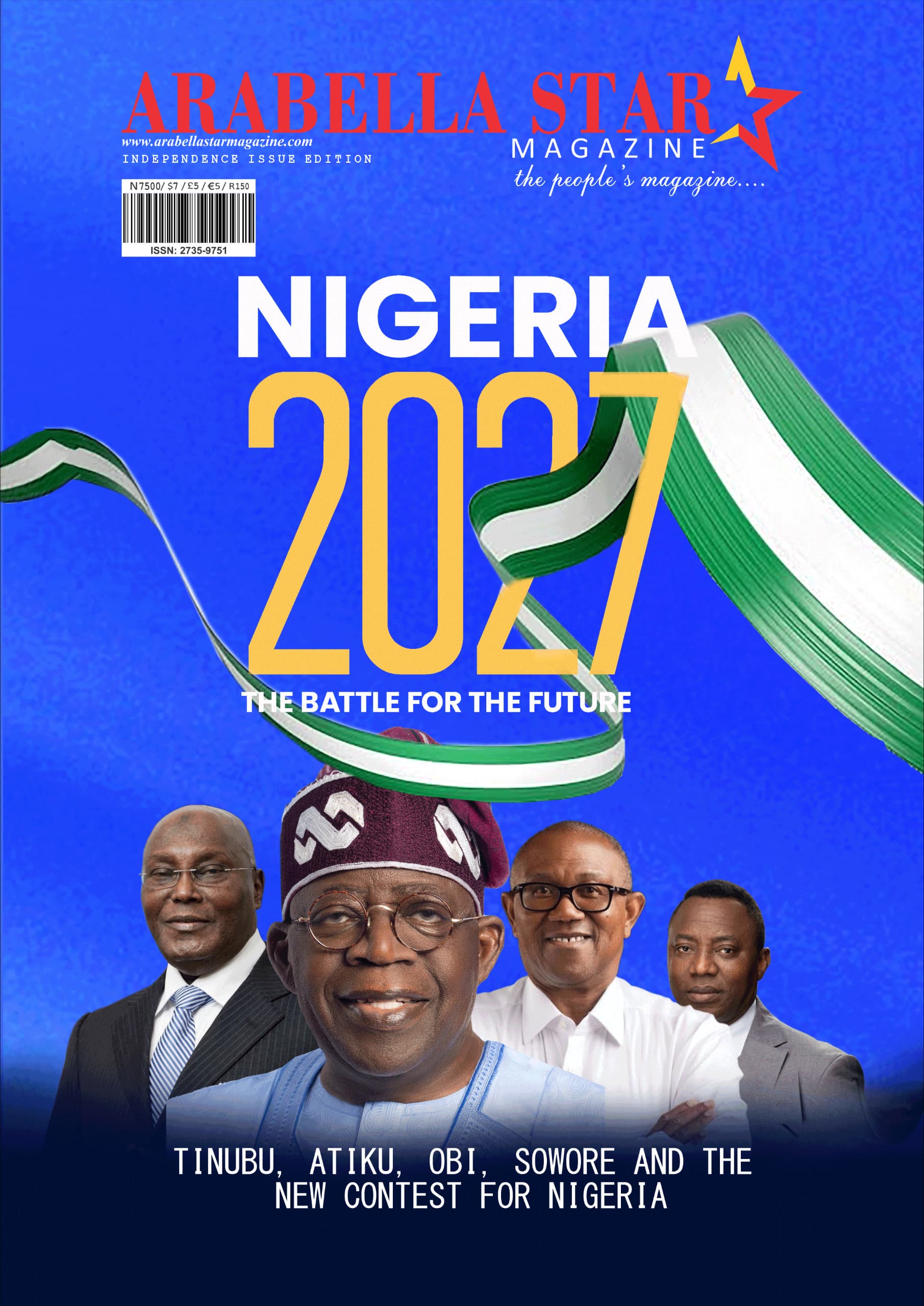

Nigeria is heading towards another presidential election, but 2027 is already looking less like an ordinary contest for Aso Rock and more like a confrontation over the direction of the country itself.
On 16 January 2027, Nigerians will elect a president and members of the National Assembly, with 18 presidential candidates on the ballot.
Among them are incumbent President Bola Ahmed Tinubu of the All Progressives Congress, former Vice-President Atiku Abubakar of the African Democratic Congress, former Anambra State governor Peter Obi of the Nigeria Democratic Congress, and African Action Congress candidate Omoyele Sowore.
But the real contest is bigger than four names. It is a battle between incumbency and opposition, political machinery and popular sentiment, experience and generational expectations, conventional politics and radical disruption.
It is also taking place against the backdrop of economic hardship, insecurity, declining public trust and an electorate increasingly impatient with political promises that do not translate into better living conditions.
Nigeria is once again being asked to choose its future from a political class that has already shaped much of its past.
THE INCUMBENT’S GAMBLE: TINUBU AND THE POLITICS OF PAIN
Bola Tinubu enters 2027 with the most powerful asset available to any presidential candidate: incumbency. He is not asking Nigerians to imagine what he might do with power. He is asking them to assess what he has already done with it. His administration has undertaken major economic reforms, most notably the removal of the petrol subsidy and changes to the foreign-exchange regime. The government argues that these measures were necessary to correct structural weaknesses and put the economy on a more sustainable footing.
But economic reform has a human cost, and Nigerians experience that cost directly. Food prices, transport costs, electricity bills, housing and household purchasing power will inevitably become political issues. For the government, the argument is that difficult reforms were unavoidable and that their benefits require time. For critics, the question is whether Nigerians have been asked to endure too much pain without seeing enough improvement in return.
That will be one of the defining questions of the election: how long can voters be asked to wait for the promised benefits of reform?
Tinubu must therefore campaign on the future while defending the present. He must persuade Nigerians that the difficulties they have experienced are part of a necessary transition rather than evidence of failed policy.
ATIKU’S LAST STAND: EXPERIENCE OR POLITICAL RECYCLE?
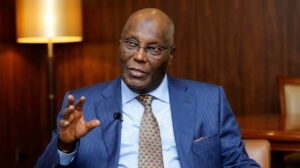
Atiku Abubakar enters the election carrying perhaps the longest political résumé among the major contenders. Former vice-president, businessman and perennial presidential contender, Atiku has spent decades at the centre of Nigerian political life. In 2027, he is attempting to reach the presidency once again under the ADC, with Rotimi Amaechi as his running mate.
Atiku’s experience is simultaneously his greatest political argument and one of the biggest questions hanging over his campaign. Supporters can present his long career as evidence of experience and institutional knowledge. Critics can present the same career as evidence that Nigeria’s political establishment continues to recycle the same personalities instead of producing a new generation of national leaders.
At 79, Atiku cannot avoid the age question. But neither can Nigeria. The country is overwhelmingly young, yet its presidential politics remains dominated by politicians whose careers began decades ago. The issue is not whether an older politician is automatically incapable of governing. It is whether a country this young should continue to rely overwhelmingly on a political generation whose political careers began long before many of today’s voters were born.
Atiku has also described 2027 as his final presidential attempt, adding another layer to his candidacy: is this the culmination of a political career, or the last attempt by an established political generation to capture the presidency?
THE OPPOSITION’S BIGGEST PROBLEM MAY NOT BE TINUBU
The opposition’s greatest challenge may not be the APC. It may be itself.
Since 2023, there have been repeated efforts to construct a unified opposition capable of presenting a stronger challenge to the ruling party. Those efforts have produced meetings, negotiations and competing coalition proposals, but agreement on a single candidate has remained elusive.
The problem is brutally simple: everybody wants the opposition to win, but the politicians do not necessarily agree on who should lead it.
That creates a dangerous contradiction. The opposition can spend months telling Nigerians that the government must be replaced while simultaneously demonstrating that it cannot agree on the alternative. For Tinubu, this fragmentation is politically useful. For the opposition, it is potentially disastrous.
The 2027 contest may therefore become a test of whether Nigeria’s opposition can place collective ambition above individual presidential ambition.
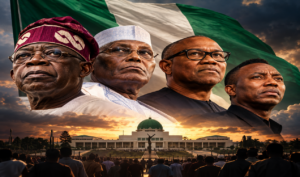
PETER OBI: FROM MOVEMENT TO MACHINE
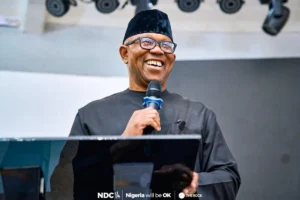
Peter Obi arrives in 2027 with something most Nigerian presidential candidates would envy: a political movement that survived beyond election day.
The Obidient movement became one of the defining political developments of the 2023 election, demonstrating that a candidate outside the traditional APC-PDP structure could mobilise significant numbers of young and politically engaged Nigerians. Obi’s message around production, economic management and accountability resonated strongly with voters frustrated with the established political order.
But 2027 presents Obi with a different challenge. The question is no longer whether he can inspire people. It is whether he can organise them.
His new political platform is younger and less institutionally established than the APC. His alliance with Rabiu Musa Kwankwaso represents an attempt to broaden his political reach and create a stronger North-South coalition.
Nigeria is not governed through hashtags. It is governed through institutions and political structures. Winning a presidential election requires a nationwide organisation capable of reaching voters across states, local governments and polling units.
Obi’s political future in 2027 will therefore be judged not simply by how many young Nigerians support him online, but by whether that enthusiasm survives the journey from smartphone screen to polling booth.
SOWORE: THE MAN WHO REFUSES THE DEAL
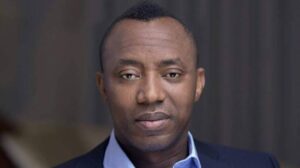
Omoyele Sowore occupies a very different position in the 2027 contest. Where Tinubu represents incumbency, Atiku represents established political experience and Obi represents movement politics, Sowore represents outright disruption.
His political message has consistently attacked the established political class and demanded fundamental changes to the Nigerian system. His platform includes ambitious proposals around wages, education, electricity, housing and anti-corruption measures. Whether every proposal can be financed and implemented is a legitimate policy question, but his larger political message is unmistakable: Nigeria cannot solve its problems simply by changing the people sitting at the top of the existing structure.
Sowore’s political importance therefore extends beyond the size of his electoral base. He is asking an uncomfortable question: what if the problem is not simply who governs Nigeria, but how Nigeria is governed?
His refusal to fully embrace opposition-coalition politics creates another contradiction. If defeating the incumbent is the overriding objective, why not join forces with everyone capable of challenging the APC? His answer is essentially that a coalition of established politicians without fundamental political change would simply reproduce the same system he opposes.
That position makes him distinct, but it also presents a difficult political problem: radical politics can generate passionate support, but passion alone does not produce a nationwide electoral majority.
STRUCTURE VS. SENTIMENT: THE REAL 2027 BATTLE
Beneath all the personalities is a larger confrontation between political structure and public sentiment.
Tinubu has incumbency and an established political organisation. Atiku has decades of political relationships. Obi has a highly motivated movement and a new North-South ticket. Sowore has an ideological message aimed directly at voters who believe the established political class has failed.
Each has political capital. Each also has vulnerabilities.
Tinubu must defend a record that includes difficult economic reforms. Atiku must persuade voters that experience should outweigh fatigue with familiar political personalities. Obi must prove that movement politics can become electoral organisation. Sowore must demonstrate that radical opposition can become a broader governing proposition.
And then there is turnout.
Nigeria’s 2023 presidential election recorded turnout of roughly 26.7 percent of registered voters. That figure should concern every political party because the greatest political force in 2027 may ultimately be the voter who decides not to vote.
A democracy cannot build strong legitimacy if large numbers of citizens conclude that elections cannot materially change their lives.
THE BATTLE FOR THE FUTURE
The 2027 election will test Tinubu’s ability to defend his record. It will test Atiku’s argument that experience still has value. It will test Obi’s ability to convert a political movement into a nationwide organisation. It will test Sowore’s argument that Nigeria requires something more fundamental than another change of political leadership.
But the deeper test belongs to Nigeria itself.
The country has changed presidents before. It has created new parties, broken old alliances and watched politicians move from one political platform to another. What remains unresolved is whether the political system can consistently produce the kind of leadership and institutions required to meet the demands of a rapidly growing population.
That is why 2027 should not be reduced to a personality contest.
The central question is not merely whether Tinubu can defeat Atiku, whether Obi can challenge the established political class or whether Sowore can break through the conventional electoral system. The larger question is what kind of Nigeria each political project represents.
A Nigeria of continuity? A Nigeria of political transition? A Nigeria of generational change? Or a Nigeria of radical disruption?
The answers will be contested throughout the campaign. Nigerians will ultimately have to judge the candidates against their records, policies, promises and the credibility of the institutions through which those promises would be delivered.
The political class may want Nigerians to believe that 2027 is simply another presidential contest.
It is not.
It is a test of whether an increasingly young and impatient country will continue to accept politics as it has always been practised—or demand something fundamentally different.
The battle is therefore not simple between Tinubu, Atiku, Obi and Sowore. It is between the political order that exists and the Nigeria that millions of citizens believe should exist.
That is the real battle for the future.