


























Live News
City to win appeal against financial charges — Maresca
Thieves stole wine worth €5m in Italy
Raphinha will miss Barcelona’s next two matches — Flick
Hurkacz knocks out Djokovic of Shanghai Masters in first game
Only mad people can vote for Tinubu — Amaechi
Triple Crown for Julius Berger at Eurocham Nigeria Awards 2026
“The woman had spent three months trying to register her small business. Every visit to a government office came with a new requirement, another missing file or another unexplained delay. Across the city, a family waited years for a court case to be concluded, while elsewhere a young graduate struggled to obtain official documents needed for employment. Their stories were different, but they all pointed to the same problem: when institutions fail, development becomes a promise rather than a reality.”
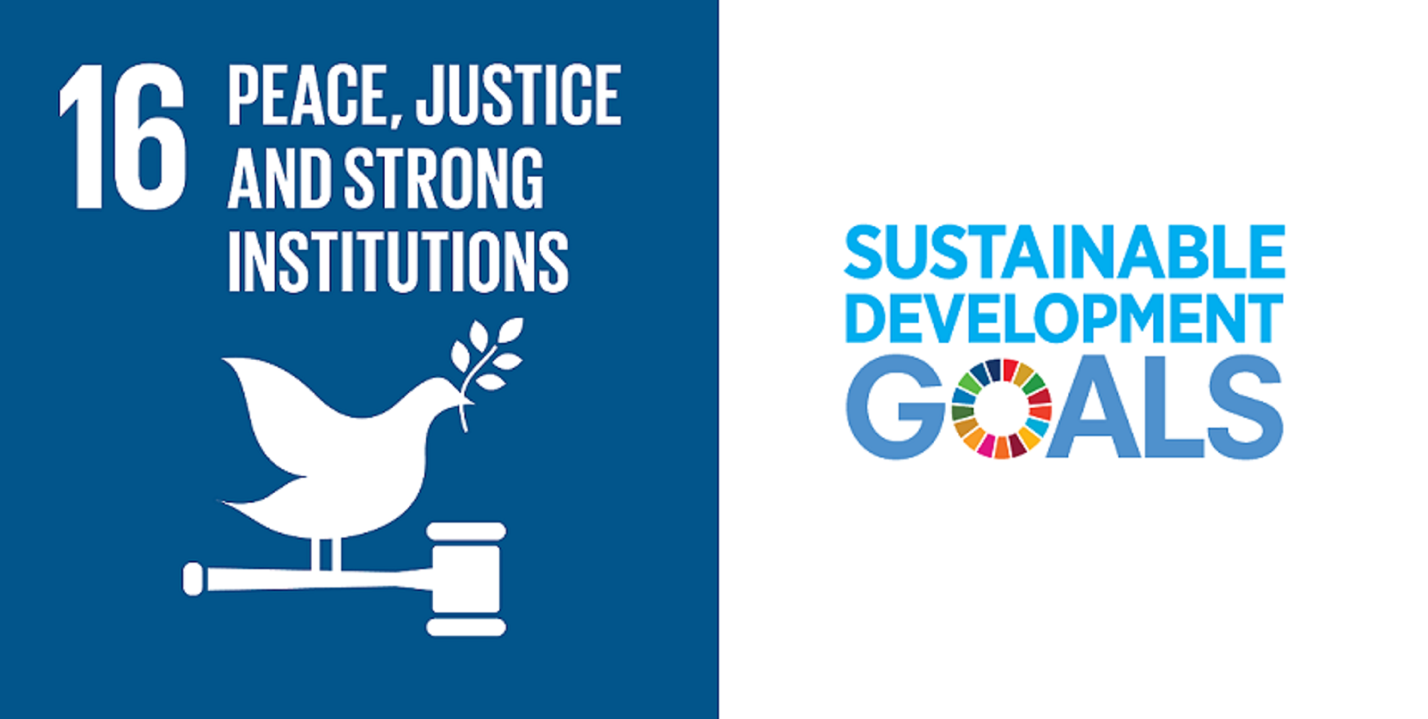
Nigeria often measures development by what people can see: new highways, bridges, airports, hospitals and power projects. But what if the country’s greatest development challenge is something far less visible? What if Nigeria’s biggest infrastructure deficit is not physical, but institutional? Roads can be built, schools can be opened and hospitals can be commissioned, but without transparent institutions, efficient public agencies and an independent justice system, development rarely delivers its full promise. That is precisely why Sustainable Development Goal 16 (SDG 16) may be the most important, and perhaps the most neglected, of the United Nations Sustainable Development Goals.
Unlike goals that focus on poverty, education or healthcare, SDG 16 addresses the foundation upon which every other development objective depends. It calls for peaceful and inclusive societies, equal access to justice and effective, accountable and transparent institutions. It is an ambitious vision, but one that has become increasingly urgent. According to the United Nations Sustainable Development Goals Report 2025, global progress towards SDG 16 is slowing as corruption, conflict, weak governance and declining public trust continue to undermine development in many countries. Billions of people worldwide still struggle to access justice, while confidence in public institutions continues to erode. If SDG 16 is the foundation of sustainable development, Nigeria must confront an uncomfortable reality. Can a country achieve meaningful development when many of its citizens no longer trust the institutions meant to serve them?
The answer may already be emerging. According to the Africa Polling Institute’s Nigeria Social Cohesion Survey 2026, only 23 percent of Nigerians expressed trust in the National Assembly, making it one of the country’s least trusted public institutions. Trust in the Federal Government stood at 28 percent, while only 24 percent expressed confidence in the Nigeria Police Force. In contrast, 51 percent of respondents said they trusted religious leaders, while 45 percent expressed significant trust in traditional rulers. These figures reveal more than public dissatisfaction. They suggest that many Nigerians increasingly look outside formal state institutions for leadership, conflict resolution and social stability. That shift should concern policymakers because no democracy can function effectively when citizens place greater confidence in informal institutions than in the constitutional bodies responsible for governance. Public trust cannot be demanded. It must be earned.
Much of this trust deficit stems from corruption. According to Transparency International’s 2024 Corruption Perceptions Index, Nigeria scored 26 out of 100, ranking 140th out of 180 countries. While perception indices are not perfect measures of actual corruption, they strongly influence public confidence, investor decisions and Nigeria’s international reputation. Corruption does far more than divert public funds. It delays justice, weakens healthcare, inflates infrastructure costs, discourages investment and convinces ordinary citizens that public institutions serve private interests rather than the public good. Perhaps the greatest danger is not corruption itself. It is when corruption becomes expected. Because once citizens begin assuming that public services require unofficial payments or personal connections, institutions gradually lose their legitimacy.
Institutional weakness carries enormous economic consequences. The World Bank’s Worldwide Governance Indicators continue to show Nigeria performing poorly in areas such as government effectiveness, rule of law and control of corruption. These are not merely technical governance scores compiled by international experts. They influence how investors assess business risks, how development partners allocate resources and how citizens experience everyday public services. Businesses are more likely to invest where contracts are enforceable. Entrepreneurs thrive where regulations are predictable. Citizens cooperate with governments they believe are fair. Strong institutions create confidence, while weak institutions create uncertainty. Until Nigeria strengthens the institutions that regulate public life, even the country’s most ambitious economic reforms will struggle to produce lasting results.
Nigeria has not ignored corruption. The Economic and Financial Crimes Commission (EFCC) continues to investigate financial crimes, prosecute offenders and recover stolen assets. The Independent Corrupt Practices and Other Related Offences Commission (ICPC) has strengthened investigations into procurement fraud, abuse of office and corruption within public institutions. These achievements demonstrate that accountability mechanisms exist. Yet decades of experience raise another uncomfortable question. If anti-corruption agencies have existed for more than twenty years, why does corruption remain one of Nigeria’s defining governance challenges? Many governance experts argue that prosecutions alone cannot transform institutions. Countries that have made sustained progress against corruption have invested heavily in preventing abuse before it occurs through transparent procurement systems, digital government services, independent oversight institutions and strong internal accountability mechanisms. Stopping corruption before it happens is often more effective than celebrating convictions after public funds have already disappeared.
Perhaps nowhere is institutional weakness more visible than within the justice system. For many Nigerians, accessing justice remains expensive, slow and frustrating. Commercial disputes can take years to resolve. Criminal cases are repeatedly adjourned. Victims wait endlessly for justice while businesses face prolonged legal uncertainty. The consequences extend far beyond courtrooms. Investors hesitate to commit long term capital where contracts cannot be enforced efficiently. Entrepreneurs become reluctant to expand businesses when commercial disputes remain unresolved for years. Ordinary citizens gradually lose confidence that justice is available to everyone equally. A stronger judiciary would therefore strengthen both democracy and economic development because justice delayed ultimately becomes development denied.
Encouragingly, Nigeria has begun modernising parts of its public administration. Digital tax systems, online company registration, electronic identity management and public financial management reforms are reducing bureaucracy and improving service delivery. These innovations demonstrate how technology can improve transparency while reducing opportunities for administrative corruption. Yet technology has limits. Computers cannot replace ethical leadership. Digital platforms cannot substitute for accountability. Strong institutions are ultimately built by people committed to serving the public interest rather than personal ambition. Technology may strengthen systems, but only integrity can sustain them.
Nigeria is not starting from scratch. Several African countries have demonstrated that institutional reform is achievable. Botswana has earned international recognition for prudent public administration and relatively low levels of corruption. Mauritius consistently ranks among Africa’s strongest democracies because of transparent governance and respect for constitutional institutions. Rwanda has invested heavily in digital government, administrative efficiency and public sector accountability, although international observers continue to debate aspects of its political freedoms. These countries differ politically, economically and historically. But they share one important lesson. Strong institutions are not built through speeches. They are built through consistent reforms sustained over many years. Nigeria’s challenge is not the absence of examples. It is whether there is sufficient political will to implement reforms consistently.
Perhaps SDG 16 has been misunderstood. It is not simply another United Nations target. It is the invisible foundation supporting every other development ambition. Hospitals cannot deliver quality healthcare without transparent procurement. Schools cannot improve education without accountable management. Businesses cannot flourish without reliable courts. Democracy cannot thrive without trusted electoral and governance institutions. As 2030 approaches, Nigeria faces a defining choice. It can continue treating institutional reform as a secondary governance issue while prioritising visible development projects, or it can recognise that the country’s greatest investment is not another road or another bridge. It is building institutions that citizens trust.
Because in the end, the strength of a nation is measured not only by the infrastructure it constructs but by the institutions that hold it together. Without strong institutions, development remains temporary. With them, it becomes sustainable.