



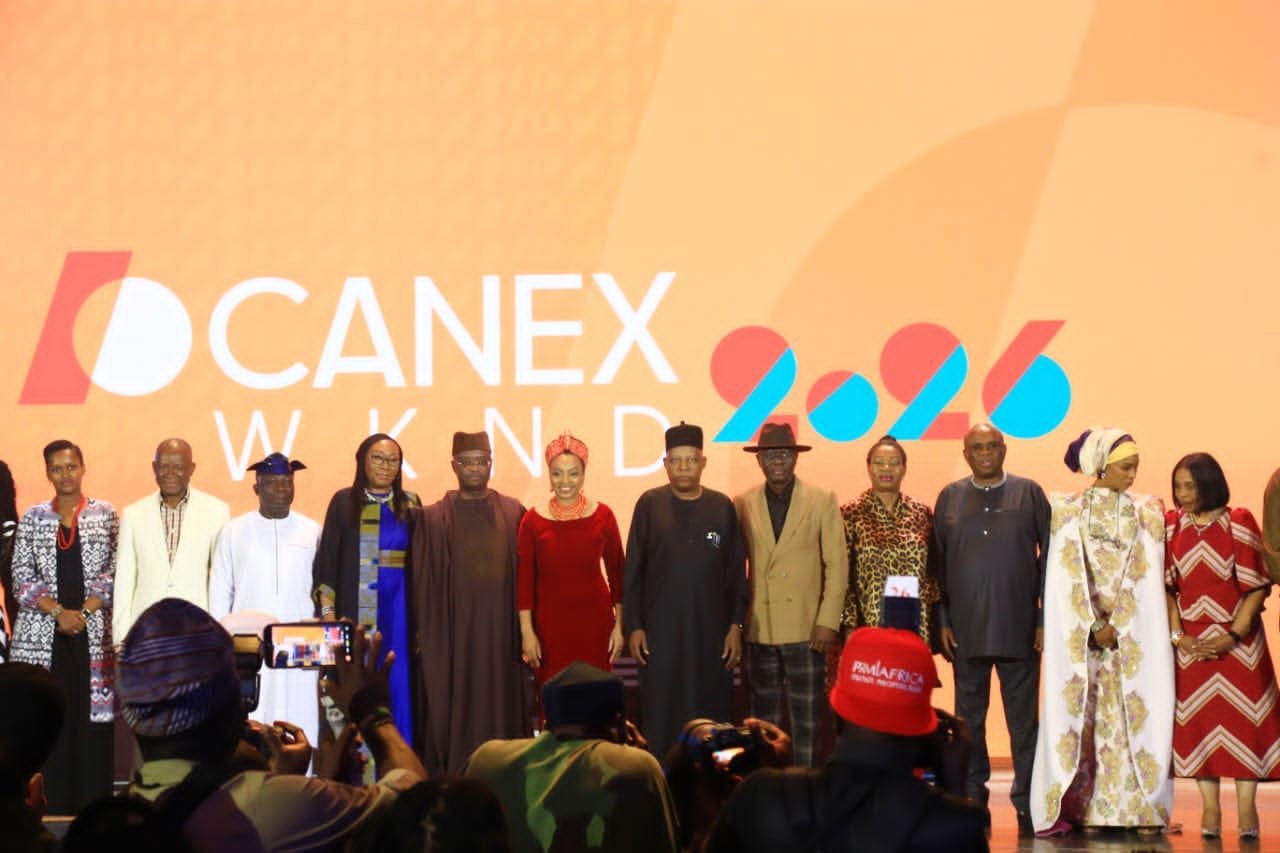

Nigeria has taken centre stage in Africa’s drive to transform its creative industry into a major economic powerhouse, with government leaders, investors and development finance institutions rallying behind a $2 billion initiative to unlock investment, create jobs and retain greater economic value from the continent’s creative output.
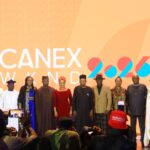
The renewed push featured prominently at the 2026 edition of the Creative African Nexus (CANEX WKND), which opened on Thursday, November 5, at the Wole Soyinka Centre for Culture and Creative Arts, Iganmu, Lagos, with more than 17,000 participants registered for the four-day gathering scheduled to run until November 8.
Declaring the event open, Vice President Kashim Shettima described CANEX as more than a cultural gathering, noting that it provides a strategic platform for converting Africa’s creative assets into investment, global market access, economic opportunities and sustainable employment, particularly for the continent’s growing youth population.
Drawing a parallel with the historic FESTAC ’77, Shettima said Africa had moved beyond showcasing its cultural heritage to positioning its creative industries as engines of economic growth, investment and global competitiveness.
He commended the African Export-Import Bank (Afreximbank) for its leadership in developing the continent’s creative economy, recalling that the 2024 edition of CANEX attracted over 4,000 participants from 81 countries, facilitated more than $540 million in deals and secured approximately $2 billion in commitments to the sector.
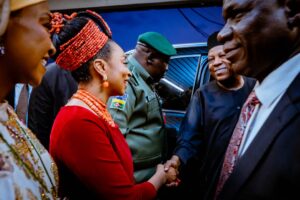
The Honourable Minister of FMITI, Dr. Jumoke Oduwole, welcoming the Vice President, Sen. Kashima Shettima, to CANEX Weekend 2026 in Lagos on Thursday 5th November,2026.
The vice President described the creative economy as a strategic pillar of President Bola Ahmed Tinubu’s Renewed Hope Agenda, insisting that the industry must be treated as serious economic infrastructure rather than merely entertainment.
He highlighted ongoing Federal Government efforts to strengthen intellectual property protection, improve access to financing and position Nigeria as a global creative hub.
Also speaking, Lagos State Governor, Babajide Sanwo-Olu, described CANEX WKND 2026 as a significant milestone in Africa’s creative and cultural journey, noting that the event represents a transition from cultural exhibition to investment, enterprise and global commercial opportunities.
Sanwo-Olu identified Lagos as one of Africa’s leading centres for film, music, design, publishing and other creative industries, stressing that the sector remains an important source of employment for young people
RMD identified improved access to finance, stronger intellectual property protection, reliable distribution networks and strategic partnerships with investors, producers and distributors as essential to unlocking the sector’s full potential.
He urged governments to provide an enabling environment, investors to support viable creative enterprises and creative professionals to regard their work as valuable economic assets.
The discussions at CANEX WKND 2026 underscored the growing recognition of Africa’s creative economy as a strategic instrument for industrialisation, international trade, investment, employment generation and global competitiveness.
For Nigeria, the gathering offers another opportunity to translate its considerable creative talent and international cultural influence into investment, intellectual property ownership, business expansion and increased participation in the global marketplace
For Nigeria, the gathering offers another opportunity to translate its considerable creative talent and international cultural influence into investment, intellectual property ownership, business expansion and increased participation in the global marketplace.
With more than 17,000 participants registered, the four-day event is expected to deepen partnerships and generate tangible outcomes, including new contracts, creative businesses, production facilities, employment opportunities and sustainable livelihoods across the continent.
The overarching message from the gathering is that Africa must move beyond exporting its creative talent and begin to own the intellectual property, businesses and distribution channels through which its creativity generates wealth.