



















Live News
PRINCESS JOY IDAM TO NAFDAC: VERIFY CLAIMS OF HARMFUL CHEMICALS IN SANITARY PADS
Italy plans to ban burqas and niqabs in schools
Iran says it has given US conditions for reopening Hormuz
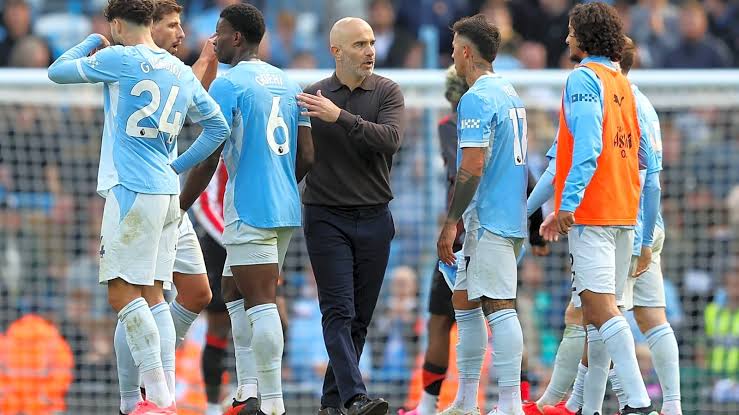
Maresca wants 1-0 wins after eight-goal Man City thriller
Mourinho questions referee decisions in Real Madrid derby loss
Man United salvage Fulham draw as pressure mounts on Carrick
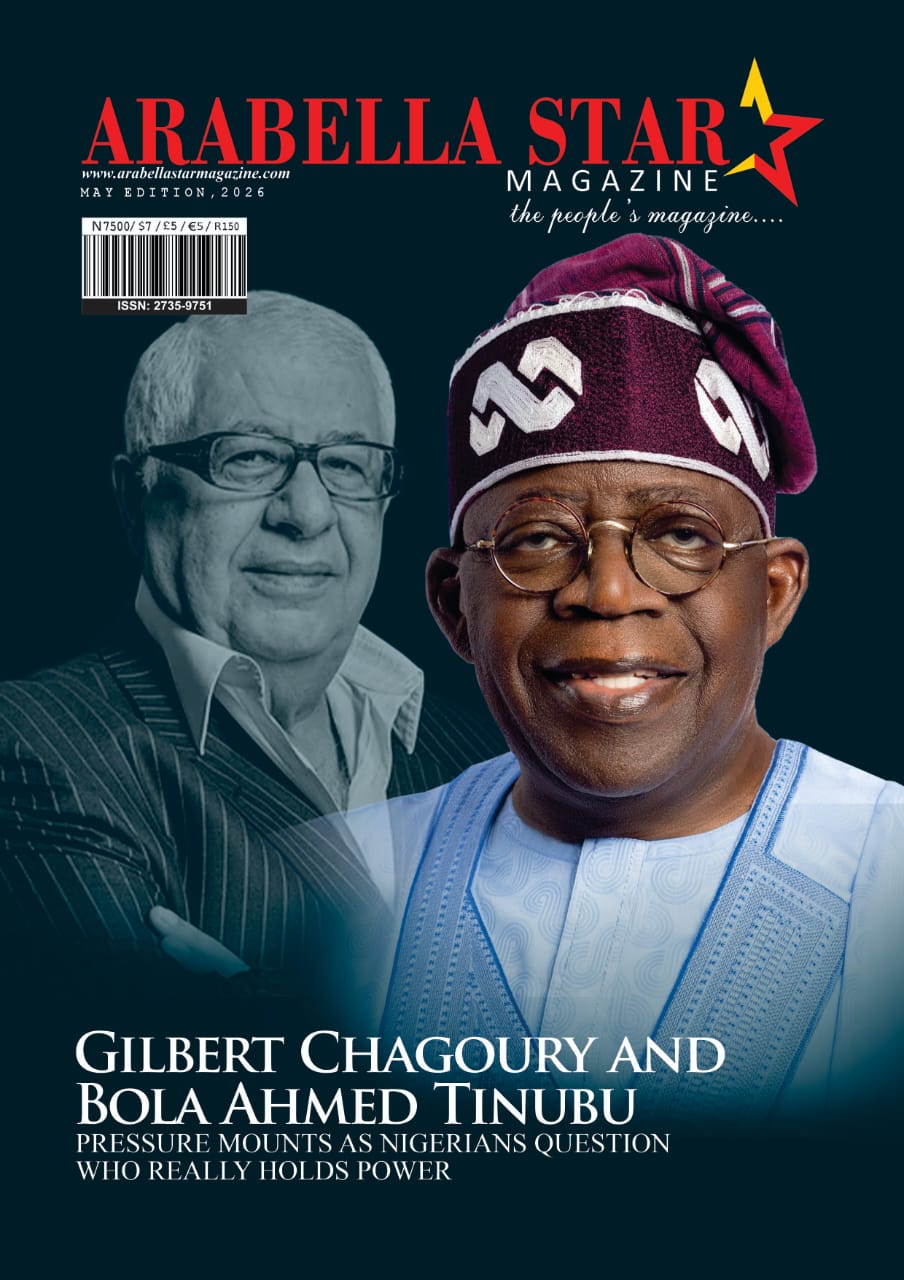
Who really governs Nigeria today — the man elected into office, or the network that stands behind him?
This question is no longer rhetorical. It is now central to Nigeria’s political reality. At the heart of this debate are Bola Ahmed Tinubu and Gilbert Chagoury, whose decades long relationship has evolved into one of the most scrutinised alliances in the country.
What was once seen as strategic collaboration is now being examined as a possible concentration of influence that extends beyond formal governance.
A 30-Year Alliance: Where It All Began
The Tinubu Chagoury relationship did not emerge overnight. It is rooted in Nigeria’s complex political and economic history.
In the 1990s, Gilbert Chagoury rose to prominence during the regime of General Sani Abacha. In 2000, a Swiss court convicted him of money laundering linked to Abacha’s looted funds, involving over 120 million dollars moved out of Nigeria. Approximately 66 million dollars was later returned. This history continues to shape public perception, particularly among critics who question the optics of his proximity to modern democratic leadership.
The alliance took a more defined shape between 1999 and 2007 when Bola Ahmed Tinubu served as Governor of Lagos State. In 2007, his administration granted Chagoury linked companies the right to reclaim about 10 million square metres of Atlantic coastline. That decision birthed the Eko Atlantic City project, widely described as “Africa’s Dubai.”
This was not just an urban development milestone. It was the institutionalisation of a partnership that fused political authority with private capital on a scale Nigeria had rarely seen.
Tinubu’s own words have reinforced the perception of closeness. He described Chagoury as a “confidante” and “my partner in daring,” adding that with such a friend, one could “sleep with a still mind.” In today’s context, those statements are being reinterpreted through a far more critical lens.
From Lagos to the Presidency: Power Goes National
When Tinubu assumed office in May 2023, the relationship expanded from a Lagos-based alignment into a national power structure.
By 2026, companies linked to Chagoury, particularly Hitech Construction, had secured infrastructure projects valued at over 13 to 14 billion dollars. The most significant of these is the Lagos Calabar Coastal Highway, a 700-kilometre project estimated at between 11 and 13 billion dollars or about 15.6 trillion naira.
The scale alone is staggering. But the real controversy lies in the process.
The contract was awarded without a competitive public bidding process. Transparency advocates argue this undermines procurement laws and opens the door to preferential treatment. Opposition figures have described it as evidence of a system where access determines opportunity.
Additional contracts, including the rehabilitation of Apapa and Tin Can ports valued at roughly 1.1 trillion naira, further reinforce the perception that a single business network is deeply embedded in national infrastructure delivery.
This raises a fundamental question. When one network dominates critical sectors, does it simply reflect efficiency or signal something more systemic?
The GCON Controversy: Symbol or Smoking Gun?
If infrastructure contracts sparked concern, the events of January 2026 escalated the issue into a national flashpoint.
President Tinubu awarded Gilbert Chagoury the Grand Commander of the Order of the Niger, Nigeria’s second highest national honour. Traditionally, this recognition is reserved for top public office holders.
However, the controversy lies in how the award was handled.
There was no official announcement through government channels. The news surfaced through a social media post by businessman Femi Otedola. Reports indicated that the award had not been published in the Federal Gazette as required by law. Questions were also raised about the timing and location, with claims that the award was presented in Paris while official records placed it in Abuja on a date when the President was reportedly not in the country.
Lagos politician Funso Doherty formally called for a National Assembly probe, citing concerns about transparency and legality.
For many Nigerians, this moment became symbolic. Not just of recognition, but of a governance process that appears increasingly opaque.
Family, Business, and the Blurring of Lines
The situation becomes more complex when family and corporate ties are considered.
Reports show that Seyi Tinubu, the President’s son, sits on the board of CDK Integrated Industries, a subsidiary of the Chagoury Group. Additional records indicate that he previously co owned an offshore company in the British Virgin Islands with Ronald Chagoury Jr.
These links may not be illegal. However, they raise legitimate questions about conflict of interest, especially in an environment where government contracts are flowing to connected entities.
In governance, perception often matters as much as legality. And the perception here is clear. The lines between public authority and private interest appear increasingly blurred.
The “Shadow Power” Debate
At the centre of public discourse is what many now describe as the “shadow power” narrative.
Critics argue that Gilbert Chagoury has become a dominant economic actor whose influence extends into policy and decision making. Some commentators have described him as a de facto economic strategist within the current administration.
One widely circulated political commentary framed Nigeria as a commodity for sale, where one controls the capital and the other holds the office.
Opposition leaders have echoed similar concerns, pointing to the absence of competitive bidding and the concentration of contracts as indicators of crony capitalism. Civil society groups have also raised alarms about accountability and institutional independence.
Whether these claims are fully substantiated or not, they are shaping public perception in powerful ways.
On the Ground: Legal and Economic Fallout
The implications are no longer theoretical. They are playing out in real time.
A group of investors has filed a lawsuit seeking 250 million dollars in damages over alleged unlawful demolition linked to the coastal highway project. The case highlights claims of no proper notice, lack of compensation, and violation of constitutional rights.
Legal experts argue that such disputes raise fundamental questions about due process and the limits of executive authority in infrastructure development.
Beyond the courts, there are economic implications. Investor confidence is sensitive to perceptions of fairness and transparency. When processes appear opaque, it can affect both domestic and foreign investment sentiment.
Government’s Position: Strategic Partnership or Misread Influence
The Presidency has consistently defended its position.
Officials describe Gilbert Chagoury as a long standing investor who has demonstrated confidence in Nigeria’s economy over decades. They argue that projects like Eko Atlantic City and Banana Island show a proven track record of delivery.
The government also defends the use of the EPC plus Finance model, stating that it allows for faster execution of major projects without immediate fiscal strain.
From this perspective, the relationship is not about control but about capacity.
Why This Moment Matters Now
This controversy is unfolding at a critical time.
Nigeria is facing rising economic pressure, increasing cost of living, and widespread public frustration. At the same time, political calculations ahead of the 2027 elections are already shaping decisions and alliances.
Analysts suggest that control of large scale infrastructure projects can translate into political leverage, influencing networks of loyalty across states and sectors.
There are also broader concerns about institutional stability, with reports of alleged coup plots adding to the atmosphere of uncertainty.
In this context, the Tinubu Chagoury relationship becomes more than a partnership. It becomes a lens through which Nigerians are examining the nature of power itself.
Call to Action: Demanding Transparency and Accountability
This is not just a story to observe. It is a moment that demands response.
Nigerians must insist on transparency in public procurement. Every major contract should be subject to open and competitive processes.
Oversight institutions must function independently. The National Assembly, judiciary, and anti-corruption agencies must investigate and act where necessary.
Civil society and the media must continue to ask difficult questions. Accountability does not happen by default. It is demanded.
Conclusion: Power, Perception, and the Future
At its core, this is not simply about two men.
It is about how power operates in Nigeria. It is about whether governance is defined by elected authority or shaped by networks of influence that operate beyond public view.
There may be no definitive evidence that one individual controls the state. But perception is shifting, and perception matters.
If democracy is to remain credible, power must not only exist within the law. It must also be seen to operate in the public interest.
And so the question remains, sharper and louder than ever.
Who really holds power in Nigeria, and who will hold them accountable?