


























Live News
City to win appeal against financial charges — Maresca
Thieves stole wine worth €5m in Italy
Raphinha will miss Barcelona’s next two matches — Flick
Hurkacz knocks out Djokovic of Shanghai Masters in first game
Only mad people can vote for Tinubu — Amaechi
Triple Crown for Julius Berger at Eurocham Nigeria Awards 2026
Nigeria’s procurement system has created a dangerous paradox: in many cases, contractors appear to benefit more from abandoning projects than completing them. Mobilisation fees are released, payment certificates are processed, contract variations are approved, and public funds continue to flow even when projects remain unfinished for years.
What should be a system for delivering development has, in some instances, evolved into a structure that rewards delay, abandonment, and poor performance.
Few institutions illustrate this problem more clearly than the Niger Delta Development Commission (NDDC). A 2022 BusinessDay investigation reported that more than 12,000 NDDC projects had been abandoned across the region, despite billions of naira being allocated over the years.
The investigation alleged a pattern in which contractors received mobilisation payments but failed to complete projects, while weak oversight and internal compromises allowed the cycle to continue. The Guardian also reported allegations that contractors were often compelled to part with significant percentages of project values before payments were processed, increasing incentives to prioritise contract awards and payments over actual project delivery.
Successive forensic audits, National Assembly investigations, and public complaints from community leaders have repeatedly highlighted the same issue: projects funded with public money but never completed.
The power sector tells a similar story. Despite decades of reforms and billions of naira invested in generation, transmission, and rural electrification, many communities remain without reliable electricity.
BudgIT and other accountability organisations have documented numerous power related projects that received budget allocations and funding but recorded little or no visible progress. Reports have also highlighted over 1,600 abandoned rural electrification projects, leaving communities without the infrastructure they were promised.
The pattern is familiar. Funds are released, contracts are awarded, implementation stalls, and citizens are left with incomplete projects while contractors move on to new opportunities.
Road infrastructure provides another example of how the system often rewards non performance.
Investigations and reports by Punch Newspaper, BudgIT Tracka, and other monitoring organisations have repeatedly exposed road projects that received substantial funding but were either abandoned or never fully executed.
In many cases, contractors cite inflation, delayed payments, or changing economic conditions. While some of these concerns may be legitimate, oversight groups argue that they do not fully explain the scale of abandoned projects across the country.
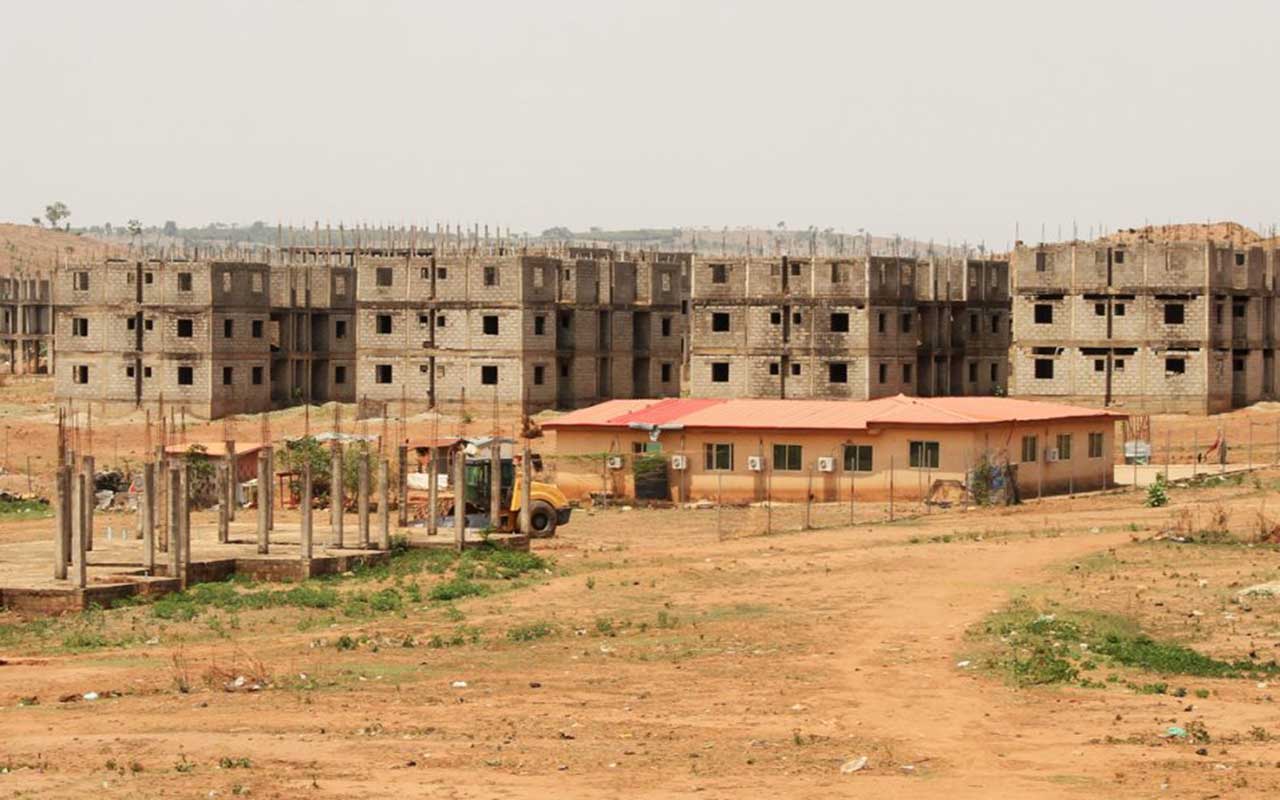
The result is a landscape dotted with incomplete roads, failed infrastructure projects, and communities forced to endure the consequences of projects that consumed public funds without delivering public value.
Several structural weaknesses help sustain this cycle.
Large mobilisation payments are often released before meaningful work begins. Oversight mechanisms are frequently weak. Project monitoring is inconsistent. Political influence can shield poorly performing contractors from sanctions. Even when projects fail, blacklisting, fund recovery, and prosecution remain relatively rare.
This creates a system where the risks of abandoning projects are often lower than the rewards of securing them.
Nigeria must urgently reform its procurement and project execution framework to break the cycle of rewarding failure. Strengthening performance bond requirements is critical to ensure that contractors have a financial stake in completing projects. Government agencies should adopt robust, technology driven monitoring systems that allow real time tracking of project progress, enabling early detection of delays and non-performance.
There must also be a clear shift toward enforcing accountability. Contractors who abandon projects should face immediate blacklisting, financial penalties, and legal consequences, while public officials who enable or overlook such failures must be investigated and sanctioned.
Procurement processes should be made more transparent, with publicly accessible data on project status, funding, and contractor performance to empower citizens, civil society, and the media to hold institutions accountable.
In addition, mobilisation payments should be tied to verifiable milestones rather than released upfront without adequate safeguards. Independent audit mechanisms should be strengthened to regularly review project implementation and flag irregularities before they escalate into systemic failures.
Ultimately, Nigeria must move from a system that prioritises contract awards to one that prioritises measurable outcomes. Every naira spent should translate into tangible development, and every abandoned project should trigger consequences that deter future misconduct. Without decisive reforms and sustained enforcement, the cycle of abandoned projects will continue to drain public resources and undermine national development.
The persistence of abandoned projects across the NDDC, power sector, and road infrastructure programmes raises serious questions about the incentives embedded within Nigeria’s procurement system. Evidence from BusinessDay, The Guardian, BudgIT, National Assembly investigations, and other accountability reports suggests that the problem extends beyond inefficiency to a broader failure of oversight and enforcement.
Until project delivery becomes more important than contract allocation, Nigeria risks remaining trapped in a cycle where public funds are spent, projects are abandoned, and citizens are left waiting for development that never arrives.