





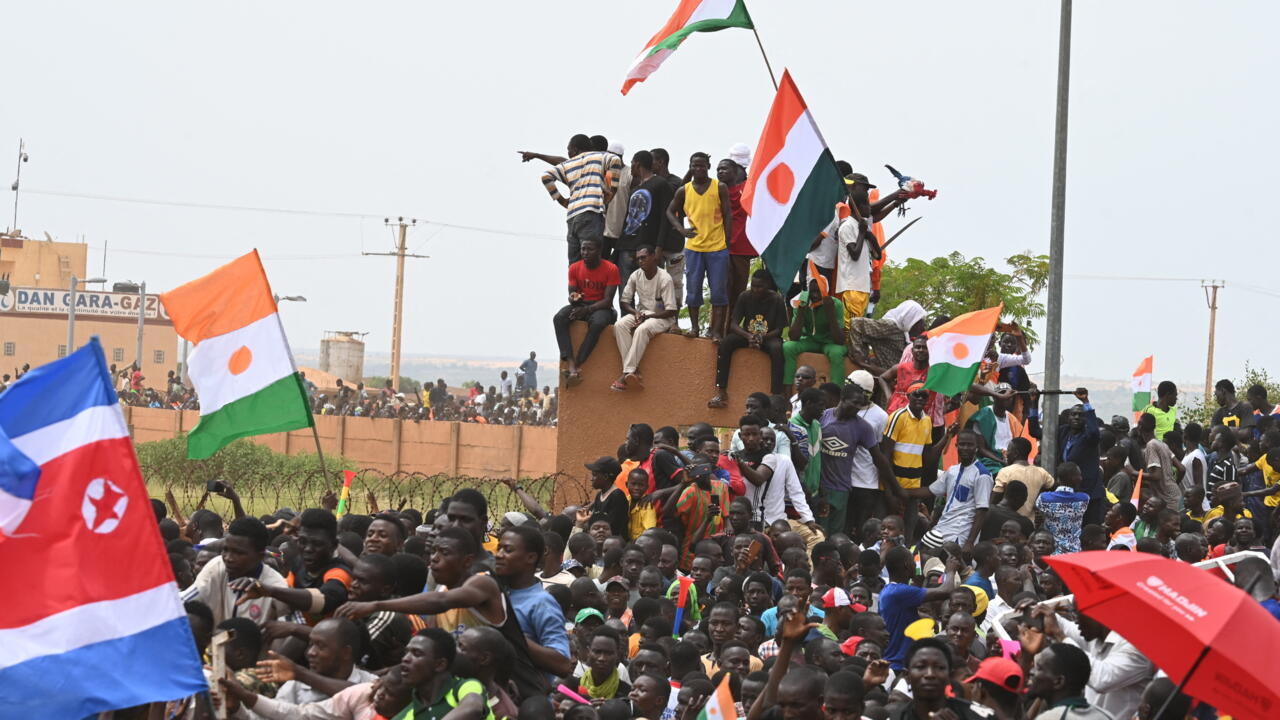

Junta-run Niger on Friday suspended nine media organisations from former colonial ruler France, saying they threatened public order.
A statement read on state television said the suspended bodies had repeatedly broadcast “content likely to gravely endanger public order, national unity, social cohesion and the stability of the institutions” of Niger.
- US fire on Iran tankers sparks reprisals as deal hangs in balance
- World Cup to hold trio of star-studded opening ceremonies
They include France 24, Radio France Internationale, France Afrique Media, LSI Africa, Agence France-Presse, TV5 Monde, TF1 Info, Jeune Afrique and Mediapart.
It said the suspension was “immediate” and covered “satellite packages, cable networks, digital platforms, websites, and mobile applications”.
RFI and France 24 had been suspended a few days after a July 2023 coup in which the junta seized power.
In December 2024, Britain’s BBC was suspended.
On Tuesday, Burkina Faso, an ally of neighbouring Niger and Mali within the Confederation of the Alliance of Sahel States (AES), all junta-run, banned the broadcasting of the TV5 Monde channel.
Mali, reeling after unprecedented jihadist and rebel attacks, has also banned French media.
Niger’s decision comes a few days before a major summit between France and African countries in Kenya. None of the three junta-led countries are taking part.
Anti‑French sentiment runs high in some former African colonies as the continent becomes a renewed diplomatic battleground, with Russian and Chinese influence growing.
Nigerien journalists working for foreign or local media have also been targeted by the junta.
This week, two Nigerien journalists, the correspondent for German radio Deutsche Welle, Gazali Abdou, and the editor of a regional newspaper, Hassane Zada, were released after being jailed for several months.
In 2025, 13 journalists were arrested in the country, according to the UN, which had called for their release.
According to local media organisations, six journalists are still being held in Niger, notably on charges of undermining national defence and plotting against the state.
In 2026, Niger plummeted 37 places in the Reporters Without Borders (RSF) press freedom index, ranking 120th out of 180 countries.
RSF and rights watchdog Amnesty International have repeatedly expressed concern about curbs on press freedom in Niger.
In 2024, Niger introduced a law criminalising the online dissemination of “data liable to disturb public order.”
It also suspended nearly 3,000 local and foreign NGOs in 2025, accusing them of lacking transparency and supporting “terrorists” or armed groups.