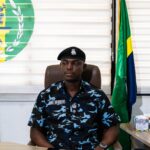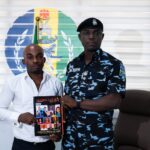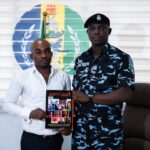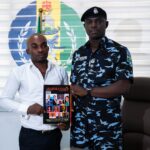

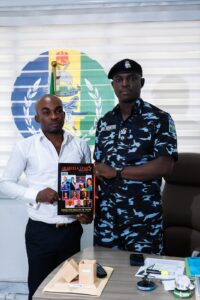
At a time when confidence in public institutions is under intense scrutiny, CSP Benjamin Hundeyin has become one of the most prominent and closely watched figures shaping the public face of Nigerian policing. As the Public Relations Officer of the Nigeria Police Force, he has transformed police communication by strategically deploying social media, technology, and behavioral insight to narrow the gap between law enforcement and the public.
In this candid conversation, Hundeyin reflects on transparency, accountability, engaging a digitally driven youth population, and the lasting imprint he hopes to leave on institutional trust.
- A Tapestry of Taste: Celebratory Flavours, Festive Feasts, and Culinary Traditions
- Lights, Sound, Celebration: The Voices, Stories, and Stars That Entertained Africa This Year
Your communication journey has seen you rise through the police force, from state-level roles to National Public Relations Officer. What personal mission drives your passion for bridging the gap between the police and the public?
What drives me is simple: delivering on every responsibility assigned to me. My focus has always been on service delivery, professionalism, and striving for excellence. I do not see my work as extraordinary or outside my mandate, I simply do what is expected of me, and I do it to the best of my ability. While perfection may not always be attainable, it remains the standard I aim for. That has consistently been my driving goal.
Q: You have been described as the face of modern policing on social media. Can you tell us why you turn platforms like X into tools for modern communication?
It’s simple because that’s where you find the youth. I do not say that the youth make up the largest demography in the country. If you want to succeed at bringing policing closer to the people, then you need to be talking to the youth. Where would you find youth these days? On social media not just X, but also TikTok and Instagram. That’s where we take the message to engage with them. So far, it has proven to be very effective, even though there is still more ground to cover. Many people now care to know more about the police.
Q: As someone who has a background in English and psychology, security psychology, how has this helped your ability to communicate effectively in times of unrest and crisis?
It helps a lot because meaning and context are everything. If you do not communicate effectively, the entire essence is lost. You need to know how to say it, when to say it, and where to say it. My background in English taught me the difference between pragmatics and semantics. Context plays a major role.
With security psychology, you learn that security is sometimes perception not just boots on the ground or the number of personnel, but giving people a sense of security. It also plays a major role in psychological warfare and propaganda. Once you understand this, you know how to respond effectively to assuage people’s fears and boost their confidence. Just like social media, this approach has proven to be effective.
Q: You have served in international peacekeeping missions under the AU. How has this global experience influenced your strategies for managing conflict communication back home in Nigeria?
It was more of a hybrid mission. There were AU components, but I worked with the UN. It made me see clearly that many things we think are not possible are actually possible. Before leaving Nigeria, some things might seem like rocket science, but when you go out there, you see that they can be done.
Coming back home, you become determined to upscale what you have to international standards, which are actually the minimum standards. It was premium exposure, working with police officers, military personnel, and civilian staff from other countries. When you return home, you put all of that together to make your country better. It has helped a lot.
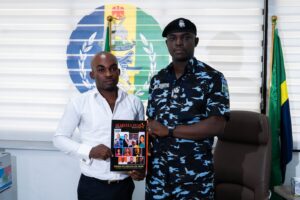
Q: Your bold, transparent style has sparked public debates on social media. How do you balance the demand for accountability with the realities of being the voice of a complex institution like the police?We are accountable to the people and to the constitution, and that cannot be compromised. We may come out bold, but we do not compromise accountability.
For example, someone once tweeted a picture of an AK-47, claiming it was licensed by the police. Many people reacted positively to it. I did a reverse image search and discovered the picture had been posted months earlier in another country. We came out to debunk it and clarified that the police do not license, have never licensed, and will never license assault rifles.
You need to come out boldly to correct falsehoods while maintaining accountability. Accountability is our watchword. We are accountable to the people, and we cannot afford to fail them.
Q: Looking back on your time as the Lagos State Police PRO, what do you consider your proudest achievement in transforming the police?My proudest achievement was bringing the police closer to the people. People could boldly tag me and expect a response. Before then, people didn’t really have an account or a person to talk to and get personal feedback from the police.
People gained confidence that they could report something and receive feedback. We also received many anonymous tips that helped us stop crimes before they occurred. Beyond bringing the police closer, it was about earning trust. That trust helped prevent crime, and that is my greatest achievement.
Q: Many officers credit you for redefining the police image through technology. What innovations are you currently implementing?Social media and the internet are here to stay, so everything we are implementing is along those lines. Recently, I opened a WhatsApp channel for the Nigeria Police Force because many people may not be on other platforms but are on WhatsApp.
The plan is to leverage technology to bring the police even closer to the people than we did in 2016, so they can own the police. With prompt and adequate information, we will be able to secure Nigeria better.
Q: Public trust remains a sensitive issue for policing globally. What strategies have proven most effective in earning trust between citizens and the police?Results. That’s the only strategy, results. For example, agencies like the FBI and the U.S. Secret Service repeatedly collaborate with the Nigerian Police National Cybercrime Center because when they report suspects in Nigeria, the suspects are arrested and prosecuted.
In Lagos, people gave anonymous tips, we acted on them, got results, and gave feedback. That builds trust. People even reached out from outside Lagos because they trusted the system. Trust came from seeing results. People who see results become your advocates. So the answer is results.
Q: You have collaborated with public figures and influencers on campaigns to curb crime. How important are these partnerships in reshaping the Nigerian Police Force?
Those partnerships are very important because influencers are opinion holders. Many people follow the bandwagon appeal, if their favorite influencer says something is bad or good, they believe it.
So it’s wise to collaborate with influencers, show them the truth, not propaganda, and let them tell their followers the truth. These partnerships have been effective, and we intend to expand them. We recently collaborated with Brain jotter on the Sailor to Infinity campaign, and we plan to do more.
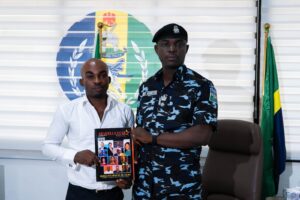
Q: As you look ahead, what legacy do you hope to leave as the first PRO in this role, both within the force and in the hearts of Nigerians?I want people to fully understand that policing is everyone’s business. Security is a collective responsibility. People need to own and support the police. Without information, the police cannot work effectively.
Even though we don’t have a 911 system yet, we have custom ways of reaching the police. If people turn their backs on the police, everyone will suffer insecurity. The legacy I want to leave is the understanding that when people support the police and provide information, insecurity will reduce to the barest minimum.
Q: Is there anything you would like to add to conclude this interview?
If you see something, say something.