



























Live News
City to win appeal against financial charges — Maresca
Thieves stole wine worth €5m in Italy
Raphinha will miss Barcelona’s next two matches — Flick
Hurkacz knocks out Djokovic of Shanghai Masters in first game
Only mad people can vote for Tinubu — Amaechi
Triple Crown for Julius Berger at Eurocham Nigeria Awards 2026
The Ebola outbreak in the Democratic Republic of Congo is spreading rapidly, raising fears that the virus could reach the capital, Kinshasa.
At the Bende-Bende river port in Maluku, about 70 kilometres northeast of Kinshasa, health worker Yves Matwa walks along the jetty using a loudspeaker to warn people arriving from areas affected by the outbreak.
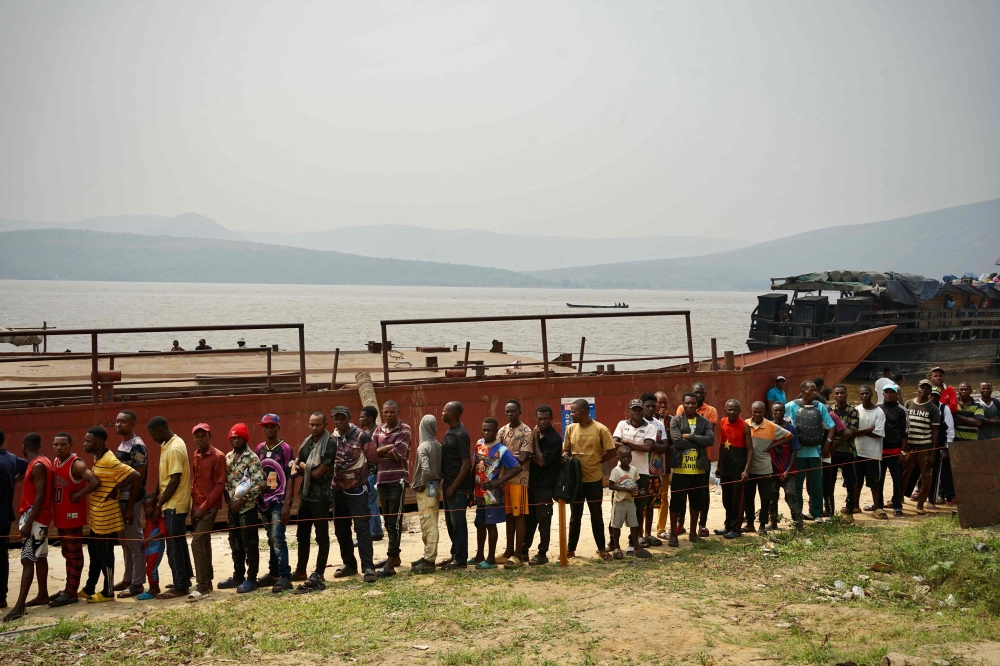
Hundreds of people travel to Kinshasa every day from northern and eastern parts of the country on wooden boats. Health workers have increased screening at the port to protect the city of nearly 17 million people, where no Ebola cases have been reported so far.
“They come from high-risk areas where the disease is present, so when they arrive here, we have to carry out checks,” said Matwa, a community engagement officer who wears a T-shirt with the words “Stop Ebola”.
“I tell them they need to be patient and that if they show no signs of the disease, we will be able to let them go,” he added.
Traders and families waited in line at the jetty as three boats arrived overnight from Kisangani, a major city in northeastern DR Congo where about 15 Ebola cases have been recorded since the outbreak was declared on May 15.
About 100 days later, more than 2,500 people have died, according to UN experts, with about half of the deaths recorded in the past three weeks. Around 5,000 cases have been reported across six provinces, although health workers believe the actual number could be higher.
“I have heard of Ebola. It kills quickly, and I’m afraid there might be sick people on my boat,” said the captain of a boat that arrived from Kasai province after a week-long journey.
Matwa said every boat is thoroughly checked to ensure that no suspected case gets through.
At nearby tents, health workers check passengers’ temperatures and look for symptoms of Ebola. They also record their contact details and where they travelled from and where they are going.
Boats considered at risk are disinfected by health workers wearing protective masks, boots and other equipment.
“The incubation period is two to 21 days. Someone could develop symptoms after returning home, but we will be able to track them,” Matwa said.
Thousands of people use the Congo River to travel across the vast country because they cannot afford air travel. This has made the river an important part of the Ebola response.
“If one case reaches Kinshasa, it would be a catastrophe,” a doctor said on condition of anonymity. “The number of cases could quickly increase.”
Some passengers are surprised to find health workers waiting for them when their boats arrive.
“It is sometimes difficult to convince them to come down from the boats and get screened,” said nurse Cecile Kisangu. “Some people do not believe the disease exists and think we made it up.”
Health workers are facing mistrust in a country where government services are weak in many areas and corruption remains a problem.
According to the DR Congo National Institute for Biomedical Research, 30 suspected cases tested negative for Ebola at the Bende-Bende checkpoint since it was established in early August.
However, the UN and other agencies say the outbreak remains a serious threat.
The current outbreak is the 17th in DR Congo and is already the deadliest in the country’s history. It is also spreading faster than previous outbreaks.
There is currently no approved vaccine or specific treatment for the Bundibugyo strain responsible for the outbreak. UN senior Ebola coordinator Julien Harneis said on Friday that the outbreak was “growing exponentially”.